
Advanced AI SEO Tools: The Future of Search Performance
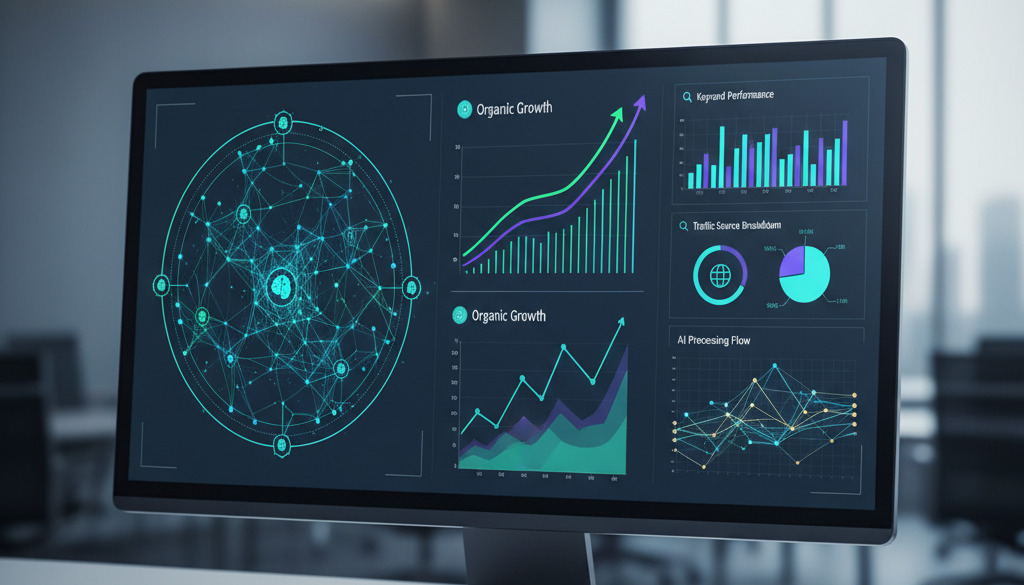
The digital marketing landscape is currently undergoing its most significant transformation since the inception of the search engine itself. We have moved beyond the era of simple keyword density and manual backlink outreach. Today, the integration of Artificial Intelligence (AI) has shifted the paradigm from a rule-based discipline to a predictive, data-driven science. Advanced AI SEO tools are no longer luxury add-ons for enterprise-level agencies; they have become the foundational infrastructure for any business seeking to maintain visibility in an increasingly crowded and automated digital marketplace.
As search engines like Google and Bing integrate generative AI directly into their results pages (SERPs), the mechanics of "ranking" have evolved. Optimization is no longer just about satisfying a crawler; it is about providing the most authoritative, contextually relevant answer to a user's intent. This article explores how advanced AI SEO tools are revolutionizing the industry, providing a strategic blueprint for professionals to leverage these technologies for sustained organic growth and a definitive competitive edge.
The Foundational Role of AI in Modern SEO
The backbone of modern SEO lies in three core pillars of artificial intelligence: Machine Learning (ML), Natural Language Processing (NLP), and Predictive Analytics. Unlike traditional software that follows a rigid if-then logic, ML algorithms allow SEO tools to learn from vast datasets, identifying patterns in search engine fluctuations that would be invisible to the human eye.[1] This enables a shift from reactive SEO—fixing issues after rankings drop—to proactive strategy.
Natural Language Processing is perhaps the most visible driver of change. It allows AI to interpret search intent by analyzing the syntax, sentiment, and context of a query. For instance, if a user searches for "best marathon training," an NLP-driven tool recognizes that the intent is educational and long-term, rather than transactional. It understands that the user is looking for guides, schedules, and gear reviews, not just a product page for running shoes. This deep understanding of entities and their relationships allows AI to guide creators toward "topical authority" rather than just "keyword relevance."
Predictive analytics takes this a step further. By analyzing historical SERP data and current market shifts, advanced AI tools can forecast which topics are likely to trend or which keywords will increase in difficulty. This allows businesses to invest their resources in content that will yield the highest Return on Investment (ROI) over a longer horizon. In essence, AI serves as the bridge between raw data and actionable intelligence, automating the tedious while illuminating the strategic.
AI-Powered Keyword Research and Opportunity Identification
Traditional keyword research tools often provide a snapshot of the past—search volumes and difficulty scores based on historical averages. Advanced AI SEO tools, however, utilize "live" data and semantic modeling to uncover opportunities that competitors frequently overlook. These tools can identify long-tail keywords, semantic variations, and Latent Semantic Indexing (LSI) terms that align with how humans actually speak and search in the age of voice and conversational AI.
Predictive keyword analysis is a game-changer for content planning. By utilizing tools like the Semrush AI Visibility Toolkit or specialized AI startups, marketers can see "search demand forecasting." This involves analyzing cyclical trends and cultural shifts to predict which queries will spike in the coming quarters. Instead of chasing high-volume keywords where the competition is already entrenched, AI helps you "skate to where the puck is going to be," securing early rankings on emerging terms.
Topic Clusters and Content Gaps
One of the most powerful features of AI SEO is the automated identification of topic clusters. AI analyzes your existing content and compares it to the "knowledge graph" of your industry. It then maps out a hub-and-spoke model, suggesting "cluster" articles that support your "pillar" pages. This boosts your site's perceived authority in the eyes of search engines. Furthermore, AI-driven content gap analysis goes beyond simply listing keywords your competitors rank for. It identifies the depth of their coverage, highlighting specific sub-topics or questions that remain unanswered in your niche, providing a clear roadmap for content that provides unique value.
Generative AI for Content Creation and Optimization
The rise of Generative AI has sparked a debate about the "human touch" in SEO. However, the most successful practitioners view AI as a sophisticated writing assistant rather than a replacement. Advanced AI tools can handle the heavy lifting of ideation and structuring. For example, an SEO team can use a tool like Writesonic or Jasper to generate comprehensive outlines based on a target keyword's SERP landscape. These tools analyze the top 10 results and instantly identify the H2 and H3 headings required to be "algorithmically competitive."
Practical application involves detailed prompting. A prompt such as, "Analyze the top 5 ranking pages for 'enterprise cloud security' and generate an article outline that covers all their key points plus a section on 'AI-driven threat detection' which they currently lack," results in a strategic blueprint that is inherently designed to outrank the competition. This saves hours of manual research and ensures that the content is structured for both readability and crawlability from the outset.
Enhancing Existing Content
AI's utility is perhaps greatest in the realm of content refreshes. Instead of manually re-reading thousands of words, AI tools can perform "readability and sentiment audits." They suggest specific areas where the language is too dense, where engagement might drop, or where keyword density has become unnatural. By using AI to rephrase, summarize, or expand upon existing sections, marketers can breathe new life into decaying assets. According to recent industry data, sites that use AI to systematically update and improve the entropy of their content see significantly faster ranking recovery than those performing manual updates.
Advanced On-Page Optimization with AI
On-page SEO remains a cornerstone of search visibility, but the "optimization" part is becoming increasingly granular. Advanced AI tools now perform real-time analysis of title tags, meta descriptions, and header structures, comparing them against the current winner on the SERP for specific queries. They don't just tell you if a keyword is present; they tell you if your title's "sentiment" matches the user's intent. For instance, if the top results are "Top 10" lists and your title is a "How-to" guide, AI will flag this misalignment.
Furthermore, AI provides specific recommendations for content refinement that go beyond the surface level. It can suggest secondary entities to include within your paragraphs to help search engines understand the context of your page. If you are writing about "Apple," AI ensures the context includes "technology, iPhone, and Cupertino" rather than "orchards, fruit, and pie," thereby preventing any ambiguity in the indexing process. This level of semantic precision ensures that your page is categorized correctly by the AI models powering Google Gemini and Bing Search.
Technical On-Page Audits
On-page SEO also includes the technical health of the individual page. AI crawlers can instantly detect issues with schema markup implementation, canonical tag errors, and URL structures that might be hindering performance. By automating the identification of these "micro-errors," SEOs can ensure that every page on their site is a finely tuned machine, ready to be indexed and ranked without technical friction.

AI for Technical SEO Auditing and Site Health Management
Technical SEO is often the most time-consuming aspect of the job, but it is also the area seeing the most significant AI breakthroughs. AI-powered crawlers, such as those integrated into Botify or Lumar, can process millions of pages in a fraction of the time traditional tools take. More importantly, they use AI to prioritize issues based on their predicted impact on rankings. Instead of a flat list of 5,000 errors, you receive a prioritized task list: "Fixing these 15 broken internal links on your high-traffic pillar pages will yield a 4% increase in crawl efficiency."
Predictive site health management is the next frontier. Advanced models can now analyze historical fluctuations in site speed, server response times, and error rates to forecast potential downtime or performance degradation. This allows technical teams to intercede before a slow site leads to a drop in Core Web Vitals scores and a subsequent loss of ranking position. In an era where Google emphasizes User Experience (UX), this "early warning system" is invaluable for enterprise-level sites.
Core Web Vitals and User Experience
AI doesn't just measure Core Web Vitals (LCP, FID, CLS); it interprets them. By correlating UX metrics with user behavior data—such as bounce rates and dwell time—AI can pinpoint exactly which elements on a page are causing friction. It might identify that an unoptimized hero image is the primary cause of a poor LCP score on mobile devices, or that an intrusive pop-up is triggering a CLS penalty. By bridging the gap between technical metrics and human behavior, AI helps create a site that satisfies both the algorithm and the visitor.
AI-Driven Link Building and Authority Building Strategies
Link building has long been the most "manual" and often frustrating part of SEO. AI is transforming this by introducing intelligence into prospect identification. Instead of broad outreach based on generic "High DA" lists, AI tools analyze the relevance of a potential backlink. They look at the semantic distance between your site and a prospect's content. A link from a smaller, niche-relevant site is often more valuable than a generic link from a high-authority news site, and AI is the only way to perform this level of relevance analysis at scale.
Predicting "link earning potential" is another revolutionary capability. AI can analyze which of your competitors' assets are getting the most links and why. Is it because of unique data? An interactive tool? A controversial opinion piece? By reverse-engineering competitor success, AI suggest types of "link-bait" content that are statistically more likely to earn high-quality organic backlinks in your specific industry. This moves link building from a "numbers game" to a strategic content play.
Competitor Backlink Profiling
Advanced competitor profiling involves AI identifying "lost" or "broken" backlink opportunities for your rivals. AI crawlers monitor competitor link profiles in real-time. If a competitor loses a high-value link because a page went 404, the AI can alert you instantly, allowing you to reach out to the linking site with a superior, working resource of your own. This "proactive displacement" strategy allows you to gain authority by filling the gaps left by your competitors' technical failures.
Leveraging AI for Local SEO and Geographic Targeting
For businesses with physical locations, Local SEO is the difference between a thriving storefront and digital invisibility. AI tools like Vicinus are now automating the management of Google Business Profiles (GBP) at scale. They use AI to analyze customer reviews and suggest responses that are not only brand-consistent but also optimized for local keywords. Furthermore, AI can scan thousands of local citations to ensure NAP (Name, Address, Phone number) consistency, which remains a critical local ranking factor.
Understanding local search behavior is where AI truly shines. Search patterns in New York City are drastically different from those in Austin or London. AI analyzes these regional nuances, identifying local slang, specific neighborhood landmarks, and localized pain points. For example, a dryer repair company in a coastal city might see a spike in "salt air corrosion" queries—an AI tool would identify this trend and suggest creating localized content specifically addressing this geo-specific issue.
Geotargeted Content Creation
AI-assisted content creation for local SEO allows brands to scale their local presence without hiring a fleet of writers. By feeding "hyper-local" data into an AI—such as local events, landmarks, or community news—marketers can generate content that feels authentic to a specific city or zip code. This level of personalization increases user engagement and signals to Google that your business is a deeply rooted, relevant authority in that specific geographic area.
AI for SERP Analysis and Competitor Intelligence
The Search Engine Results Page is a dynamic, living entity. Results change based on time of day, user history, and rapid algorithmic updates. AI allows for "Deep SERP" analysis, which tracks not just ranking positions, but the presence of SERP features like People Also Ask (PAA) boxes, featured snippets, and the new AI-generated overviews. This allows SEOs to tailor their content to win these "zero-click" opportunities, which now capture a significant portion of search traffic.
Predictive ranking factor analysis is perhaps the most "advanced" use of AI in search today. Companies are now using proprietary AI models to correlate thousands of variables across the top 100 results for a specific keyword. The tool might determine that for the keyword "best CRM software," backlink count is less important than "technical feature comparison tables" and "user review sentiment." This allows you to stop guessing which SEO "best practices" to follow and start focusing on the specific factors that are actually moving the needle in your specific niche.
Advanced Competitor Benchmarking
AI-driven benchmarking allows you to see the "why" behind a competitor's traffic. Instead of just seeing that a rival is gaining traffic, AI identifies the specific content clusters, technical improvements, or link-building campaigns that are driving that growth. This provides a clear "threat assessment," allowing you to pivot your strategy to either defend your market share or attack a competitor's newfound weak points. In 2026, competitive intelligence is about speed—how quickly you can identify a competitor's move and formulate a data-backed counter-strategy.

Implementing and Integrating AI SEO Tools into Your Workflow
The transition to AI-powered SEO requires more than just a software subscription; it requires a cultural shift within the marketing team. Choosing the right tools depends on your specific business goals. A small boutique agency might prioritize a free-tier AI writing assistant like the ones mentioned by Stackmatix, while a global enterprise would need the "AI Visibility Toolkit" from Semrush or the technical depth of Botify. When evaluating tools, look for "integration-readiness"—how well do they connect with your existing CMS, Google Search Console, and analytics suites?
Developing a strategic roadmap is essential. A phased approach works best: start by automating the "low-hanging fruit" like meta-tag generation and technical site audits. Once the team is comfortable with the output, transition to using AI for content ideation and topic clustering. Finally, move toward predictive analysis and SERP feature optimization. This graduation allows the team to build trust in the AI's data before relying on it for high-stakes strategic decisions.
Team Training and Skill Development
The role of the SEO professional is shifting from "doer" to "editor and strategist." Marketing teams need upskilling in "prompt engineering"—the art of communicating effectively with AI models. Furthermore, there must be a focus on data literacy. It is no longer enough to report on rankings; SEOs must be able to explain the insights provided by AI and how they translate into business revenue. Fostering a data-driven culture ensures that AI is used as a lever for growth rather than just another source of noise.
The Future of AI in SEO: Trends and Ethical Considerations
Looking toward 2026 and beyond, the influence of AI on SEO will only deepen. We are entering the era of "Generative Engine Optimization" (GEO), where visibility isn't just about listed results but about being the "cited source" in a Gemini or ChatGPT-style summary. Voice search optimization and AI-powered video SEO will also become critical, as algorithms get better at "watching" and "listening" to content to understand its value. The relationship between AI tools and search engine algorithms will be a constant dance of adaptation.
However, this power comes with significant ethical responsibilities. The "responsible use of AI" in content creation is paramount. Google's algorithms are increasingly sophisticated at detecting "hollow" AI content that offers no new value. Plagiarism, even when unintentional due to LLM hallucinations, can lead to severe penalties. Furthermore, as SEOs, we must remain vigilant about data privacy and the potential for algorithmic bias—ensuring that the data our AI tools are learning from is diverse and accurate.
Ethical Considerations and Responsible AI Use
True success with AI SEO tools involves maintaining a "human-in-the-loop" philosophy. AI should provide the data, the structure, and the draft, but a human expert should provide the final verification, the unique perspective, and the brand voice. By using AI to handle the scale and humans to handle the soul, businesses can navigate the complexities of modern search while building a brand that stands for authenticity and authority in a world increasingly shaped by algorithms.
Conclusion
Advanced AI SEO tools have permanently altered the digital marketing landscape. From uncovering hidden keyword opportunities to automating complex technical audits and predicting future search trends, these technologies offer a level of precision and scale that was previously unimaginable. We have moved from an era of guesswork to an era of actionable intelligence.
For businesses seeking sustained organic growth, the adoption of AI is no longer optional. The complexity of modern search engines—driven by their own internal AI systems—requires a mirrored response from marketers. By embracing these advanced tools and integrating them into a strategic, human-guided workflow, you can navigate the volatility of the search market and unlock new levels of performance. The future of search belongs to those who can master the synergy between human creativity and artificial intelligence. Now is the time to audit your toolkit and step into the future of SEO.
FAQ
What are advanced AI SEO tools?
Advanced AI SEO tools leverage artificial intelligence and machine learning to analyze vast amounts of data, identify complex patterns, and automate tasks previously requiring human expertise. They go beyond basic keyword research, offering predictive analytics and sophisticated content optimization strategies.
How do advanced AI SEO tools improve search performance?
These tools enhance search performance by providing deeper insights into user intent, predicting search trends, identifying technical SEO issues with greater accuracy, and helping to generate more relevant and engaging content. This allows for more targeted optimization efforts and better alignment with search engine algorithms.
Are advanced AI SEO tools suitable for small businesses?
Yes, many advanced AI SEO tools offer tiered pricing and scalable features, making them accessible and beneficial for small businesses. They can help smaller operations compete more effectively by automating data analysis and providing expert-level insights that might otherwise be cost-prohibitive.
Keep reading
Hand-picked guides that go deeper — open the one you need next:
- No Technical Knowledge Needed: Easy SEO with Volteruno
- Organic Traffic Growth: AI for Page 1 on Google
- Simplify Your SEO with Volteruno for Business
- AI for SEO Rankings: Guide to Search Visibility