
Organic Traffic Growth: AI for Page 1 on Google

Key Takeaways
- Organic traffic is crucial for long-term growth. It represents potential customers actively searching for your products or services, offering a sustainable alternative to paid ads.
- AI is the solution for busy business owners. Advanced AI tools can automate and scale the creation of professional, SEO-optimized content, solving the problem of not having enough time or resources.
- SEO is evolving, not dying. With AI-powered search results (like Google's AI Overviews), the goal is now "SERP visibility" (being seen and cited) in addition to just clicks.
- AI enhances, not replaces, strategy. The most effective approach combines AI's content generation power with human oversight for strategy, fact-checking, and maintaining brand voice.
- AI-driven traffic converts well. Recent data shows that visitors arriving from AI-powered search features are highly engaged and often convert better than traffic from other channels.
- You can start with minimal risk. Many platforms offer free trials, allowing you to experience the benefits of AI content creation before committing.
The Untapped Power of Organic Traffic in Today's Market
As an established business owner, you understand the value of a steady stream of customers. You've built your company through hard work, and you know that sustainable growth is the key to long-term success. In the digital world, that sustainable growth comes from one primary source: organic traffic. This refers to visitors who find your website through a search engine like Google, not by clicking on a paid ad.[1] These are your ideal customers—people actively looking for the solutions you provide.
However, attracting these customers is a major challenge. The secret lies in consistently publishing high-quality, helpful content that answers their questions. For a busy business owner who is juggling operations, sales, and a dozen other responsibilities, becoming a prolific content creator is often impossible. You know you need an online presence, but you simply don't have the time or the inclination to write blog post after blog post.
This is where Artificial Intelligence (AI) changes everything.[2] Far from being a complex technology reserved for Silicon Valley giants, AI has emerged as a practical, transformative solution for businesses just like yours. It addresses the single biggest hurdle to organic traffic growth—the content creation bottleneck. This article will demystify AI's role in SEO and provide you with actionable insights to harness its power, turning your website into a magnet for customers.
Understanding the Core Principles of Organic Search Engine Optimization
Before diving into how AI can help, it's important to understand the basic principles of how search engines work. Think of Google as a massive digital library. Its goal is to provide the most relevant and reliable answer to a user's query. To do this, it evaluates websites based on several core factors, and understanding them is foundational to your success.
Search Intent: The "Why" Behind the Search
The single most important concept in modern SEO is search intent. This is the underlying reason a person is searching. Are they looking for information ("what is the best material for outdoor signs"), trying to find a local business ("sign maker near me"), or ready to buy ("custom vinyl banner printing")? Aligning your content with the search intent of your potential customers is paramount. If you sell custom banners, an article about the history of sign-making won't attract buyers. An article on "How to Design a Banner for a Grand Opening" will.
The Three Pillars of Great Content
Google's algorithm is sophisticated, but its preference is for content that is:
- Relevant: It directly addresses the searcher's query and intent.
- Authoritative: It demonstrates expertise and is trustworthy. Google is increasingly focused on a concept called E-E-A-T (Experience, Expertise, Authoritativeness, Trustworthiness).
- User-Friendly: The content is well-structured, easy to read, and provides a good experience on your website.
Consistently creating content that embodies these three pillars is how you build a lasting foundation for organic growth. It's a long-term strategy, not a flip-of-the-switch trick, but its effects are powerful and cumulative.
The AI Revolution in Content Creation: Beyond Basic Automation
When business owners hear "Artificial Intelligence," they might picture complicated code or sci-fi robots. In the context of growing your business, it’s much simpler: AI is a powerful assistant that can write for you. Forget the clunky, robotic text of early AI. Modern platforms are incredibly sophisticated, capable of generating professional content that is virtually indistinguishable from what a human expert would write.
These tools can create everything from detailed blog posts and AI-generated product descriptions to social media updates and email newsletters. The key is to differentiate between basic, free tools that produce generic text and professional platforms specifically designed for SEO-optimized content. The latter are built with search engine guidelines in mind, crafting articles that are not only well-written but also structured to rank well on Google. Think of AI as your in-house content writer, ready to work 24/7 without needing a single coffee break.
AI-Powered Keyword Research: Finding Your Customers' Search Queries
To attract customers, you must first understand the exact words and phrases they are typing into Google. This process is called keyword research. Traditionally, this was a tedious task involving spreadsheets and guesswork. AI has completely transformed this process, making it faster, deeper, and far more effective.
Uncovering Hidden Opportunities
AI tools can analyze massive amounts of search data in seconds. They can identify not only the most obvious keywords for your industry but also "long-tail" keywords. These are longer, more specific phrases that indicate a user is closer to making a purchase (e.g., "emergency plumbing service in Dallas" instead of just "plumber").
Understanding Nuance and Intent
Beyond finding keywords, AI excels at analyzing the user intent behind them. It can cluster related terms and questions, giving you a complete picture of a topic. This allows you to create comprehensive content that answers every possible question a potential customer might have, establishing your website as a definitive authority. This modern approach is detailed in resources like the AI Content Keyword Research: The 2026 Strategy Guide, which highlights how AI provides a significant competitive advantage over outdated manual methods.
Generating High-Quality SEO Content at Scale with AI
Here we arrive at the core benefit for busy business owners: the ability to produce a steady stream of expert-level content without writing a single word yourself. This is where the promise of AI becomes a reality for your business's growth. It’s no longer about whether you can find the time to write, but about leveraging the right tool to do it for you.
From Blank Page to Published Post in Minutes
Imagine having a marketing assistant who never gets writer's block. Advanced AI platforms are designed to do just this. For instance, some services work like magic; their proprietary artificial intelligence writes professional SEO blog articles for your website in minutes. You provide a topic or keyword, and the AI generates a complete, well-structured article that is optimized for search engines.
More Than Just Keywords
Professional AI content tools do not just stuff keywords into sentences. They are programmed to understand the principles of good writing and SEO. The content they produce is:
- Informative and engaging: It provides real value to the reader, keeping them on your page longer.
- Well-structured: It uses proper headings (H2s, H3s), short paragraphs, and lists to improve readability—a key factor for both users and Google.
- Brand-aligned: Modern AI can even be trained to adapt to your specific brand voice, whether it's formal and professional or friendly and approachable.
By effectively addressing search queries with comprehensive content, you directly signal to Google that your page is the best answer, which is the secret to achieving higher rankings and more traffic.
Optimizing Your Existing Content with AI Assistance
Your website likely already has some existing content—pages or posts that were written months or even years ago. These are valuable assets that shouldn't be left to gather digital dust. AI provides an incredible opportunity to refresh and optimize this older content, boosting its performance without starting from scratch.

Identifying SEO Gaps and Opportunities
AI tools can crawl your website and analyze your existing pages just like Google does. They can quickly identify weaknesses, such as:
- Missing keywords that your competitors are ranking for.
- Thin content that needs to be expanded.
- Outdated information that needs to be refreshed.
- Poor readability that is hurting user engagement.
Automating the Improvement Process
Once gaps are identified, AI can assist in fixing them. It can suggest new paragraphs to add, rephrase sentences for greater clarity and impact, and recommend where to strategically place important keywords. It can also help you build a stronger site structure by identifying opportunities for internal linking—linking your own pages together to help Google and users navigate your site more effectively. Refreshing old content is one of the fastest ways to see a lift in your search engine rankings.
Enhancing User Experience (UX) with AI-Driven Content Strategies
Google's primary goal is to satisfy its users. Therefore, it pays close attention to how users interact with your website. This is broadly referred to as User Experience (UX). If visitors land on your page and immediately click the "back" button (a "bounce"), it tells Google your page wasn't a good result. If they stay, read, and engage with the content, it signals the opposite.
Structure and Readability
AI excels at creating content that is inherently user-friendly. Because AI is trained on vast amounts of high-performing web content, it understands what works best for online readers. It naturally produces content with:
- Clear, logical structure: Using H2 and H3 headings to break up text.
- Short, digestible paragraphs: Avoiding long "walls of text" that are intimidating to read.
- Bulleted and numbered lists: Making complex information easy to scan and understand.
Meeting User Intent Instantly
When your content, crafted by AI, perfectly matches the user's search intent, the visitor feels understood. They have found the answer they were looking for. This satisfaction is a powerful UX signal. It leads to lower bounce rates and increased "time on page"—two critical metrics that search engines use to evaluate the quality of your website. Ultimately, a better user experience translates directly to higher search rankings and more sustained organic traffic.
The Role of AI in Understanding Your Audience Better
Beyond simply creating content, AI offers powerful capabilities for analyzing how that content performs and who it resonates with. For a business owner, this means gaining unprecedented insight into the minds of your customers without having to sift through mountains of data manually. AI acts as your personal data analyst, turning raw numbers into actionable business intelligence.
By integrating with your website analytics, AI can identify patterns in user behavior. It can tell you which blog posts are most popular, how long people are reading them, and what topics generate the most engagement. This feedback loop is invaluable. It helps you double down on what’s working and move away from content topics that don’t resonate with your target audience. For business owners using platforms like Shopify or WordPress, this insight can be particularly powerful for refining your content strategy. For example, a guide on WordPress SEO automation with AI can help you integrate these analytics directly into your workflow.
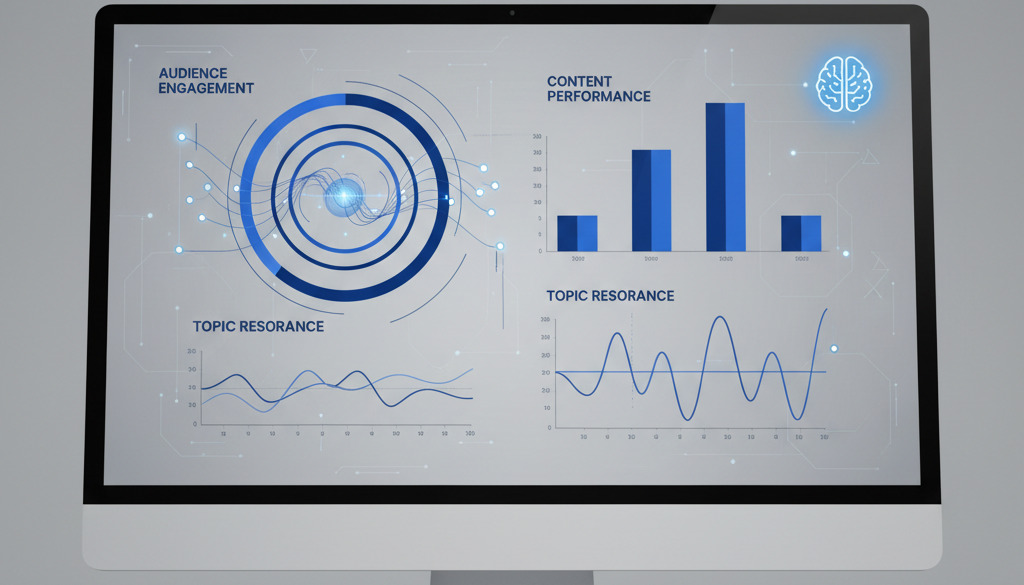
Measuring the Impact: AI and Organic Traffic Analytics
One of the most common questions from business owners is: "How do I know if this is actually working?" The beauty of digital marketing is that everything is measurable. With AI, tracking the return on investment (ROI) of your content efforts becomes clearer and more efficient.
Key Metrics to Watch
You don't need to be an analytics expert. Focus on a few key metrics that directly reflect business growth:
- Organic Sessions: The number of visitors arriving from search engines. Is it going up over time?
- Keyword Rankings: Are you starting to appear on page 1 for your target keywords?
- Conversion Rate from Organic: Of the visitors who arrive from Google, how many take a desired action (e.g., fill out a contact form, make a phone call)?
Connecting Content to Results
This is where services that provide AI-written SEO articles truly shine. When you consistently publish optimized content, you will see these numbers move. The goal is simple: get more customers from your blog by having experts write the SEO articles for you. This approach is designed to deliver a tangible result: customers find you on their own in Google. The clear and steady growth in your analytics will prove the strategy is working, demonstrating a direct line between your AI-assisted content and your bottom line.
Common Pitfalls to Avoid When Using AI for Organic Growth
Like any powerful tool, AI must be used correctly to achieve the best results. While it offers incredible advantages, there are potential pitfalls to be aware of. Navigating these wisely is key to a successful long-term strategy.
The Dangers of "Set It and Forget It"
The biggest mistake is to treat AI as a completely hands-off solution. It is an assistant, not a replacement for your business knowledge. Always review AI-generated content to ensure it aligns with your brand’s expertise and voice. Human oversight is non-negotiable for quality control.
Fact-Checking is Critical
While advanced AI is remarkably accurate, it is not infallible. For topics that are technical, medical, or financial, it is absolutely essential to have a human expert fact-check the content. Your brand's reputation for trustworthiness is on the line.
Avoiding the Generic Trap
Without proper guidance, AI can sometimes produce content that feels generic. The key to avoiding this is to provide specific prompts and to infuse the content with your unique brand personality during the review process. Share specific examples, customer stories, or your unique perspective to make the content truly your own.
The Human Element: Strategy, Editing, and Oversight
To truly succeed with AI for organic traffic growth, it is crucial to understand that technology and human expertise are partners. The most successful businesses are not replacing their marketers with AI; they are empowering them with AI tools. Your strategic input as the business owner is the most valuable ingredient.
Strategy Before Automation
AI can’t create your business strategy. You are the expert on your customers, your market, and your goals. The role of the human is to direct the AI. You decide which topics are most important, which customer pain points to address, and what the overall message should be. The AI then executes that strategy with speed and scale.
The Editor’s Crucial Role
The final step before publishing any AI-generated content should always be a human review. This editing process involves:
- Checking for accuracy and tone.
- Injecting brand-specific anecdotes or examples.
- Ensuring the call-to-action is clear and compelling.
This blend of AI’s efficiency and human judgment creates a final product that is superior to what either could produce alone. It combines technological power with authentic human insight.
Practical Implementation: Integrating AI into Your Content Workflow
Getting started with AI might seem daunting, but it can be broken down into a simple, manageable process. You don't need a technical background to begin leveraging these powerful tools for your business.
A Step-by-Step Approach
- Define Your Goals: What do you want to achieve? More leads? Higher local visibility? Start with 1-2 core objectives.
- Identify Your Core Topics: Brainstorm 5-10 main themes that your potential customers care about. What problems do you solve for them?
- Choose the Right Platform: Look for a service specifically designed for SEO content generation. Many businesses are turning to platforms that offer professional content creation as a service.
- Experience it Firsthand: The best way to understand the power of AI is to see it in action. Many services recognize this and offer introductory deals. For example, it’s possible to find offers where your first 5 posts are free, providing a no-risk way to test the quality and effectiveness of the platform.
- Review, Refine, and Publish: Use the AI to generate your first articles. Review them, add your personal touch, and publish them to your website's blog.
- Track and Adjust: Monitor your analytics over the next 90 days. See which topics perform best and use that data to guide your next batch of content.
Case Study Spotlight: AI-Driven Organic Growth in Action
Let's consider a hypothetical, yet highly typical, example. A family-owned an HVAC company in a competitive suburban market. The owner, in his late 50s, knew he needed to compete online but had zero time or interest in blogging. His website had been stagnant for years, bringing in almost no new business.
The Challenge
The company's website wasn't ranking for crucial local keywords like "furnace repair in [Town Name]" or "AC installation cost." Competitors with active blogs dominated the first page of Google, capturing the majority of valuable local search traffic.
The AI Solution
The owner signed up for an AI content service. He provided a list of his services and service areas. The AI platform immediately began generating a series of SEO-optimized blog posts targeting specific, high-intent local keywords:
- "5 Signs You Need Emergency AC Repair This Summer"
- "How to Choose the Right Size Furnace for Your Home"
- "The Benefits of a Smart Thermostat Installation in [Town Name]"
The Results
Within the first 90 days of consistently publishing two AI-generated articles per week, the results were dramatic. The website started ranking on page 1 for a dozen new keywords. Organic traffic increased by over 300%. Most importantly, the company began receiving 5-7 new inbound leads per week directly from their website's contact form—customers who found them through Google. The AI content had turned their static website into an automated lead generation machine.
Unlocking Sustainable Organic Traffic Growth with AI-Powered SEO
The success story of the HVAC company highlights a powerful shift in digital marketing: the ability of Artificial Intelligence to drive tangible organic traffic growth, propelling businesses onto the first page of Google search results. This isn't about quick, fleeting wins; it's about building a sustainable foundation of relevant, valuable content that search engines and, more importantly, potential customers, actively seek out. For businesses struggling to gain visibility in crowded online landscapes, AI offers a strategic advantage by automating and optimizing a crucial aspect of SEO: content creation. The core principle behind this organic traffic growth AI approach is to consistently produce content that directly answers user search queries, positions the business as an authority, and signals to search engines that the website is a valuable resource. Traditional SEO often involves a labor-intensive process of keyword research, content planning, writing, editing, and optimization. While this approach can yield excellent results, it demands significant time, expertise, and ongoing commitment, which many small and medium-sized businesses simply cannot allocate. AI-powered tools democratize this process. They can analyze vast amounts of search data to identify low-competition, high-intent keywords that potential customers are actively using. These insights are then fed into AI writing engines, which can generate well-structured, informative articles that are optimized for these specific keywords from the outset. This doesn't mean replacing human strategists entirely. Instead, it means augmenting their capabilities, allowing them to focus on higher-level strategy, refining AI-generated content, and ensuring brand voice consistency. The speed and scale at which AI can produce relevant content is a game-changer. Instead of a single blog post per month, businesses can now realistically aim for multiple posts per week, covering a wider array of relevant topics and targeting a more diverse set of search queries. This consistent influx of fresh, optimized content signals activity and relevance to search engine algorithms, which are designed to reward websites that regularly provide new value to users. The impact of this AI-driven organic traffic growth extends far beyond mere website visits. When a website ranks on the first page of Google for relevant search terms, it experiences a dramatic increase in qualified leads. Users who perform these searches are actively looking for solutions to specific problems or services. By being present and authoritative on the search results page, businesses can capture these high-intent users before they even consider competitors. The HVAC company's leap from near-zero website leads to 5-7 new inquiries per week after just 90 days of AI content deployment is a prime example. This transformation is a direct consequence of improved search engine rankings and the subsequent increase in targeted organic traffic. It demonstrates that AI isn't just a tool for content creation; it's a powerful engine for lead generation, capable of turning a dormant online presence into a dynamic sales funnel. Furthermore, the SEO benefits are cumulative. Each piece of AI-generated content that ranks contributes to the website's overall authority and domain score. This improved authority makes it easier for subsequent content to rank, creating a virtuous cycle of organic traffic growth and enhanced online visibility. The key is consistency and a strategic approach, leveraging AI to do the heavy lifting of content production while human expertise guides the overall SEO strategy.Beyond Keywords: AI's Role in Semantic Search and User Intent
The evolution of search engines has moved beyond simple keyword matching. Google and other platforms now emphasize understanding the underlying intent and context behind a user's query. This is known as semantic search. AI plays a crucial role in enabling businesses to align their content with this nuanced understanding. AI content generation tools can be trained not just on keywords but also on common questions, related topics, and the overall informational needs of a target audience. For instance, instead of just targeting "furnace repair," an AI can be prompted to generate content that addresses related user questions like "how much does furnace repair cost," "common furnace problems," or "when to repair vs. replace a furnace." This multi-faceted approach ensures that the content not only ranks for specific terms but also satisfies a broader range of user inquiries, demonstrating comprehensive expertise. AI-powered tools can analyze search trends and user behavior patterns to identify emerging topics and shifts in user intent. This allows businesses to proactively create content that anticipates future search queries, giving them a competitive edge. By understanding the "why" behind a search, AI can help craft content that addresses the user's ultimate goal, whether it's to learn, compare, or buy. This user-centric approach is precisely what modern search engines prioritize. When AI-generated content successfully addresses user intent comprehensively, it signals a higher quality resource to search algorithms, leading to better rankings and more sustained organic traffic growth. This goes beyond optimizing for a list of transactional keywords; it’s about building a library of content that serves the entire customer journey, from initial awareness to final decision-making.AI's Role in Enhancing Content Authority and User Engagement
Beyond simply generating text that includes relevant keywords, AI's sophisticated analytical capabilities can significantly elevate the perceived authority of a website in the eyes of search engines and users alike. By analyzing vast datasets of successful content, AI can identify patterns in structure, readability, and information depth that correlate with higher rankings. This information can then be used to guide the creation of new content or the optimization of existing articles. For example, an AI might suggest incorporating more expert quotes, providing clearer data visualizations, or expanding on specific sub-topics that are frequently explored in top-performing content. This data-driven approach to content structuring ensures that the generated material is not only keyword-rich but also inherently more valuable and trustworthy, factors that are crucial for achieving and maintaining Page 1 visibility on Google. The objective shifts from merely stuffing keywords to building a comprehensive and authoritative resource that users and search engines naturally gravitate towards.
Furthermore, AI excels at personalizing content experiences, a key driver of user engagement and, consequently, organic traffic growth. While traditional SEO focuses on broad audience targeting, AI can help tailor content to specific user segments based on their browsing history, search behavior, and inferred interests. This might involve dynamically adjusting headlines, call-to-actions, or even the depth of information presented within an article. For instance, a user who has previously shown interest in beginner guides might be presented with simpler explanations and foundational concepts, while a more advanced user might see more in-depth technical details and case studies. This hyper-personalization, powered by AI, leads to longer on-page times, lower bounce rates, and increased conversion potential – all positive signals that Google’s algorithms interpret as indicators of high-quality, relevant content. This sophisticated level of audience understanding allows for a more nuanced and effective approach to organic traffic growth, moving beyond generic content to create truly resonant user experiences.
Frequently Asked Questions
How can AI help with organic traffic growth for Page 1 on Google?
AI can analyze vast amounts of data to identify high-potential keywords, understand user search intent more accurately, and optimize content for relevance and engagement. It also aids in competitor analysis and predicts trends, allowing for a more strategic approach to SEO.
What specific AI tools are beneficial for boosting organic traffic?
Tools leveraging machine learning for keyword research and content optimization, AI-powered SEO platforms that offer personalized recommendations, and AI chatbots for content creation and user engagement can all significantly contribute to organic traffic growth.
Is AI a replacement for human SEO expertise in achieving Page 1 rankings?
No, AI is a powerful assistant to human SEO experts. While AI excels at data processing and pattern recognition, human strategists are still crucial for interpreting AI insights, ethical considerations, creative content development, and understanding nuanced user behavior.
Keep reading
Hand-picked guides that go deeper — open the one you need next:
- Multilingual Content Strategy: Expand Your Reach with AI
- Multilingual SEO AI: Supercharging Your Global Reach
- SEO Article Writing Strategy: A Comprehensive Guide for 2026
- Beyond Basic Blogging: Advanced SEO Features of Volteruno's AI Platform