
Shopify SEO: Boost Sales with Blog Content Strategy
Key Takeaways
- A strong SEO content strategy is crucial for driving free, targeted traffic to your Shopify store, moving beyond reliance on paid ads.
- Your strategy must include optimizing core pages (products, categories) and creating high-value blog content that answers customer questions.
- Keyword research is foundational. Focus on user intent (what customers are searching for) and map keywords to the different stages of their buying journey.
- Technical SEO, including site speed and mobile-friendliness, is essential for a good user experience and better search rankings. Do not neglect it.
- Internal linking is a powerful, free SEO tactic that spreads authority throughout your site and helps both users and search engines navigate your store.
- AI-powered tools and services can significantly reduce the time and effort required for content creation, making a consistent SEO strategy achievable for busy entrepreneurs.
As a Shopify store owner, you’re likely an expert in your products and your customers.[1] However, driving consistent, profitable traffic to your store can feel like a constant battle. You might be pouring money into social media ads or email marketing, but what if your ideal customers could find you for free, right when they’re searching for products you sell? This is the immense, often untapped, potential of organic search.
The problem is that many established business owners, especially those over 40 who didn't grow up in the online world, know they need to be visible on Google but find the process daunting. Search Engine Optimization (SEO) sounds complex, and the idea of creating a steady stream of high-quality content seems impossible between managing inventory, customers, and daily operations. You know it’s important, but you lack the time, expertise, or frankly, the desire to become an SEO expert yourself.
The solution lies in a clear, strategic, and actionable SEO content plan designed specifically for the Shopify platform. It’s not about learning arcane acronyms or trying to "trick" Google. It’s about building a solid foundation that consistently attracts the right audience and converts them into loyal customers. This guide will walk you through that exact process, breaking down a successful Shopify SEO content strategy into manageable steps, from keyword research to advanced AI integration, all tailored for busy business owners who need results, not more complexity.
Understanding Your Shopify Store's SEO Foundation
Before diving into content creation, it’s vital to understand what SEO truly means for an e-commerce business. In simple terms, Search Engine Optimization is the process of making your online store more visible and attractive to search engines like Google. When a potential customer searches for a product you offer, you want your store to appear at the top of the results. This isn’t about luck; it’s about strategy.
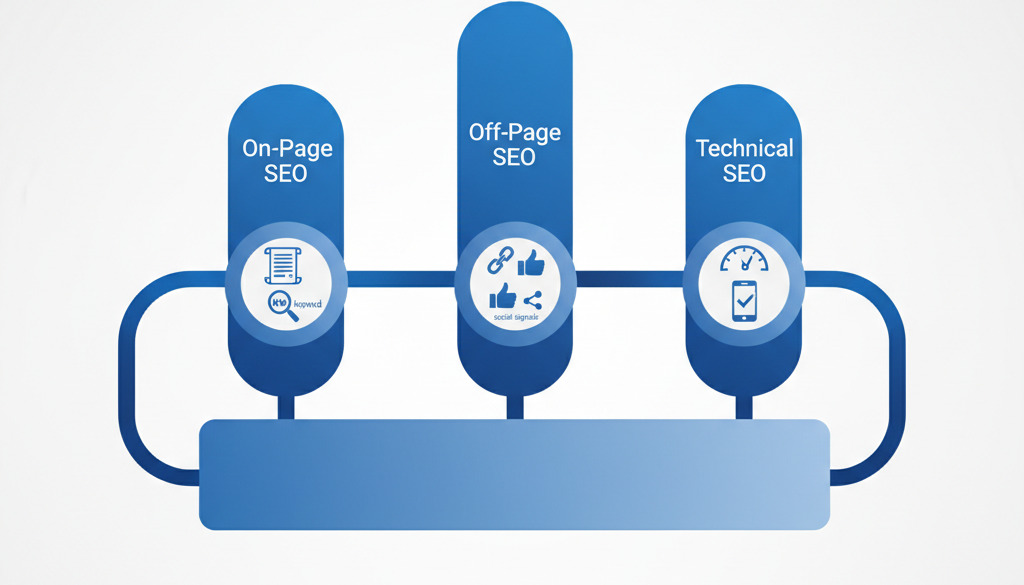
The world of Shopify SEO can be broken down into three core pillars:
- On-Page SEO: This involves everything on your actual store pages that you can control. It includes the text on your product pages, the titles of your blog posts, the images you use, and how you structure your content.
- Off-Page SEO: This refers to actions taken outside of your own website to impact your rankings. The most significant factor here is earning backlinks—links from other reputable websites to your store—which act as a "vote of confidence" for search engines.
- Technical SEO: This is the behind-the-scenes magic. It ensures your site is fast, secure, easy for search engines to "crawl" and understand, and provides a good experience for users on any device, especially mobile phones.
Content is the fuel that powers all three pillars. Without high-quality, relevant content, your on-page SEO is meaningless, no one will link to you (off-page SEO), and even a technically perfect site will have nothing to show for it. Your content—from product descriptions to in-depth blog articles—is what tells Google you are an authority in your niche and that you have the answers and products searchers are looking for.
Conducting Comprehensive Keyword Research for Shopify
Keyword research is the cornerstone of any successful SEO strategy. It’s the process of discovering the words and phrases your potential customers are typing into Google. By understanding this, you can create content that directly meets their needs, drawing them to your store like a magnet.[2]
Identifying Your Target Audience's Search Intent
The first step is to understand search intent—the *why* behind a search. Not all searches are created equal. They generally fall into three categories:
- Informational Intent: The user is looking for information. For example, "how to clean leather boots" or "what are the benefits of organic cotton." This is where blog content shines.
- Navigational Intent: The user is trying to get to a specific website. For example, "Volteruno blog" or "Shopify login."
- Transactional Intent: The user is looking to make a purchase. These searches often include words like "buy," "sale," "discount," or specific product names like "buy Nike Air Max size 10." These keywords are perfect for your product and category pages.
Tools and Techniques for Finding Keywords
While you can start by brainstorming terms related to your products, using professional tools will give you a significant advantage. Popular options include Google Keyword Planner, SEMrush, and Ahrefs. These platforms provide data on how many people are searching for a term (volume), how difficult it is to rank for (difficulty), and related keywords you might not have considered.
Categorizing Keywords for Your Strategy
As you gather keywords, organize them into logical groups:
- Broad Keywords: High-volume, general terms like "running shoes." These are highly competitive.
- Long-Tail Keywords: Longer, more specific phrases like "best waterproof trail running shoes for women." These have lower volume but much higher conversion rates because the searcher knows exactly what they want.
- Competitor-Based Keywords: Analyzing what keywords your direct competitors are ranking for can reveal valuable opportunities.
- Product-Specific Keywords: These relate directly to your items, including brand names, model numbers, and unique features.
Mapping Keywords to the Customer Journey
A crucial step many store owners miss is mapping keywords to the customer journey. Think of it as a path a customer takes from awareness to purchase.
- Awareness Stage: The customer has a problem but may not know the solution. They use informational keywords. For a skincare store, a keyword might be "how to get rid of dry skin." Your blog post on this topic introduces them to your brand.
- Consideration Stage: The customer is now exploring solutions. They might search "best face oil for dry skin" or "serum vs moisturizer." Your comparison articles and detailed guides capture this audience.
- Decision Stage: The customer is ready to buy. They search for transactional keywords like "buy hydrating hyaluronic acid serum" or "[Your Brand Name] face oil sale." These keywords should lead them directly to your optimized product and category pages.
By creating content for each stage, you build trust and guide the customer from their initial question straight to your checkout page. For more advanced strategies on this, exploring an AI content keyword research guide can provide deeper insights into automating this process.
Crafting High-Converting Product Page Content
Your product pages are where the final conversion happens. They need to be perfectly optimized to persuade both search engines and human visitors. Old methods of just stuffing keywords into a generic description are long gone. Today, it’s about creating a compelling sales pitch that is also technically sound.
Start with your product titles and meta descriptions. The title should be clear, include the primary keyword and product name, and be easy to read. The meta description is your 160-character ad in the search results; it doesn't directly impact ranking, but a compelling one dramatically increases clicks. Focus on benefits, mention free shipping if you offer it, and create a sense of urgency.
The product description itself should be benefit-driven. Don't just list features; explain how those features solve a customer's problem or improve their life. Instead of "500-thread count cotton," write "Experience unparalleled softness and a better night's sleep with our luxurious 500-thread count cotton sheets." Incorporate your target keywords naturally throughout the text, but always prioritize readability and persuasion.
The Power of Visuals: Image Alt Text and Beyond
High-quality images and videos are non-negotiable in e-commerce. However, search engines can't "see" images. That's where image alt text comes in. This is a short, descriptive text you add to each image. It should describe what the image shows and, where appropriate, include a relevant keyword. This helps your images appear in Google Image Search and makes your site accessible to visually impaired users.
Leveraging Customer Reviews for SEO and Trust
Customer reviews are an SEO goldmine. They provide a constant stream of fresh, unique content filled with natural, long-tail keywords that you might have missed. More importantly, they build social proof and trust. Seeing positive reviews from real people can be the final nudge a potential customer needs to click "Add to Cart." Shopify has built-in review apps and many third-party options that make collecting and displaying reviews simple.
Strategic Use of Blog Content for Driving Organic Traffic
If your product pages are for converting customers who are ready to buy, your blog is for attracting everyone else. A Shopify blog is one of the most powerful tools for capturing customers at the top and middle of the sales funnel. It allows you to create informational content that solves your audience's problems, builds trust, and establishes your brand as an industry authority.
The key to a successful blog is consistency, which is often the biggest hurdle for busy business owners. This is where planning with a content calendar becomes essential. Align your topics with seasonal trends, holidays, and upcoming product launches. For example, a store selling gardening supplies should post about "preparing your garden for spring" in late winter.
Vary your content formats to keep your audience engaged:
- How-To Guides: Step-by-step instructions that solve a specific problem (e.g., "How to Style a Bookshelf Like a Pro").
- Comparison Articles: Compare two or more products, either yours or against a competitor (e.g., "Linen vs. Cotton Sheets: Which Is Right for You?").
- Listicles: "Top 10" or "5 Best" articles are highly shareable and easy to read (e.g., "5 Must-Have Accessories for Your Home Office").
- Industry News & Trends: Position yourself as an expert by commenting on what's new in your niche.
For many entrepreneurs, the main obstacle is the time it takes to write professional articles. This is where modern solutions can be a game-changer. For instance, services like More Customers From Your Blog utilize proprietary artificial intelligence to generate professional, SEO-optimized blog articles for your website in minutes. This allows you to maintain a consistent publishing schedule without taking time away from your core business, letting customers find you organically on Google. It’s an efficient way to scale your content marketing, one that over 500 companies are already using.
Optimizing Category Pages for Discoverability
Category pages (or "collection pages" in Shopify terminology) are some of the most important yet most neglected pages for SEO. These pages group related products, and they are prime targets for broader keywords that sit between informational and transactional intent (e.g., "women's summer dresses," "mid-century modern coffee tables").
Just like product pages, your category pages need unique titles and meta descriptions that are optimized for their target keyword. Avoid generic titles like "Products" or "Collection." Be specific: "Hand-Poured Soy Wax Candles" is far more effective than just "Candles."
A best practice is to add a short, engaging introductory paragraph at the top of your category pages. This is a perfect spot to include your main keyword, answer common questions related to the category, and provide helpful context for the user. For instance, on a "Men's Winter Jackets" page, you could write a brief intro about the different types of insulation and what to look for in a quality jacket.
Internal Linking Strategies for Category Pages
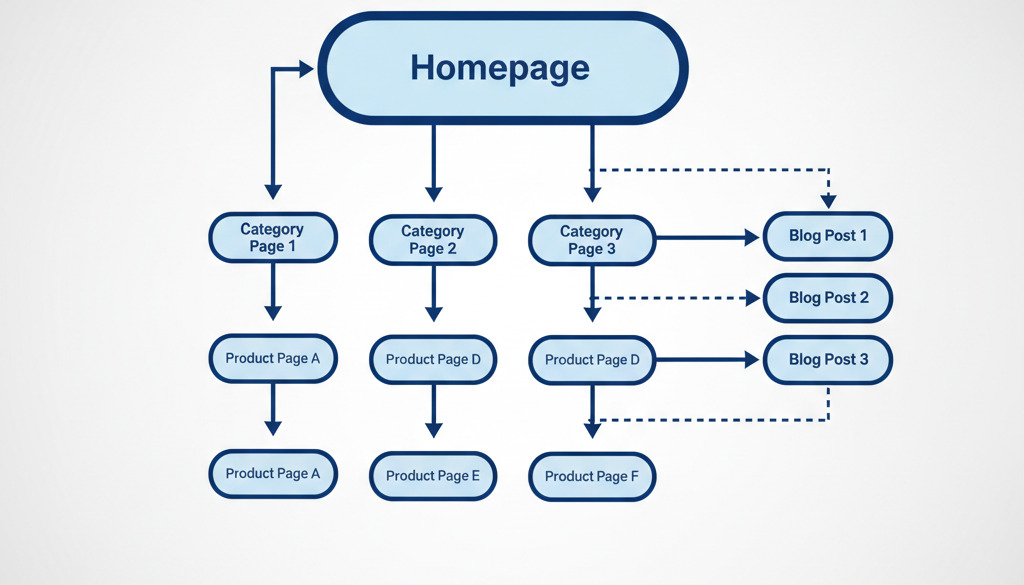
Your category pages are hubs that connect your homepage to your individual product pages. You should link to your most important category pages directly from your main navigation menu. Additionally, when you mention a product category in a blog post, be sure to link to the relevant category page. This helps distribute "link equity" or SEO value throughout your site and guides users toward a purchase.
The Art of Internal Linking for Enhanced SEO and User Navigation
Internal linking—the practice of linking from one page on your site to another—is a critically underrated SEO tactic. It’s completely free, you have total control over it, and it has a significant impact on both search engine rankings and user experience.
Here’s why it’s so critical:
- It helps search engines understand your site structure: A logical linking structure shows Google how your content is related and which pages are most important.
- It spreads authority (link equity): If you have a blog post that gets a lot of backlinks, the internal links from that post to your product or category pages will pass some of that authority along, boosting their ranking potential.
- It improves user experience: Good internal linking guides your visitors to other relevant content, keeping them on your site longer and moving them closer to a purchase.
A best practice is to use descriptive anchor text for your links. Anchor text is the clickable text in a hyperlink. Instead of using generic phrases like "click here," use text that describes the page you're linking to. For example: "Check out our wide selection of all-natural skincare products." This tells both users and search engines exactly what to expect on the next page.
Technical SEO Essentials for Shopify Store Owners
While content is king, technical SEO is the castle it lives in. If the castle is slow, crumbling, or hard to navigate, no one will stick around to see the king. Shopify handles many technical aspects of SEO automatically, but there are key areas you still need to monitor and optimize.
First and foremost is site speed. In e-commerce, every second counts. A slow-loading site leads to higher bounce rates (people leaving immediately) and lower conversion rates. Use Google's PageSpeed Insights tool to check your site's performance. Common culprits for slow speeds on Shopify are oversized images and too many third-party apps. Compress your images before uploading them and periodically review your installed apps to remove any you aren't using.
Next is mobile-friendliness. The majority of online traffic now comes from mobile devices. Your store must provide a seamless experience on a smartphone screen. Most modern Shopify themes are responsive by design, but you should always test your site on your own phone to ensure everything—from navigation to checkout—is fast and easy.
Finally, consider implementing schema markup. This is a form of structured data that you add to your site's code to help search engines understand your content in greater detail. For a Shopify store, this can enable "rich snippets" in search results, such as star ratings, pricing, and stock availability appearing directly on the Google results page. This can dramatically improve your click-through rate. Many SEO apps in the Shopify App Store can help you add schema markup without needing to code.
Managing Sitemaps and Robots.txt for Search Engine Crawling
Shopify automatically generates a `sitemap.xml` file for your store. This file is a roadmap that lists all your important pages, making it easier for Google to find and index your content. You should submit your sitemap URL (yourdomain.com/sitemap.xml) to Google Search Console. Additionally, Shopify manages your `robots.txt` file, which gives instructions to search engine crawlers about which pages to ignore (like your cart and checkout pages). For most store owners, these default settings are sufficient and don't require manual changes.
Building Authority with Off-Page SEO and Link Building
Off-page SEO primarily revolves around building backlinks. A backlink is a link from another website to your store. Google views these links as recommendations. A link from a high-authority, relevant site (like a major industry blog or news outlet) carries significantly more weight than a link from a small, unknown blog.
It's crucial to focus on ethical, white-hat link-building strategies. Avoid schemes that promise hundreds of links for a low price; these are often toxic links that can get your site penalized by Google. Instead, focus on earning links naturally through:
- Guest Blogging: Write a helpful article for another blog in your niche. In return, you typically get a link back to your store in your author bio or within the content itself.
- Influencer Collaborations: Partner with influencers or creators in your space. When they feature your product, they will often link back to your store from their blog or social media profiles.
- Digital PR: Create unique, newsworthy content—like an industry study, a compelling infographic, or a powerful case study—and pitch it to journalists and bloggers. This is how you earn high-authority media mentions.
Link building is a long-term game, but every high-quality link you earn strengthens your store's domain authority, making it easier for all your pages to rank higher.
Leveraging User-Generated Content (UGC) for SEO Benefits
User-generated content (UGC) is any content—text, videos, images, reviews—created by your customers rather than your brand. This type of content is incredibly valuable for both SEO and building trust.
Actively encourage customers to leave reviews on your product pages. You can automate this process with email follow-ups after a purchase. Beyond just reviews, consider creating a branded hashtag and encouraging customers to share photos of themselves using your products on Instagram. You can then showcase these images in a gallery on your product pages or homepage (with permission, of course).
UGC contributes to your SEO efforts in several ways:
- Fresh Content: It provides a constant stream of new content for your pages, which search engines favor.
- Long-Tail Keywords: Customers describe products in their own words, naturally using a wide variety of long-tail keywords.
- Social Proof: It shows potential buyers that real people are buying and loving your products, which can significantly boost conversions.
Integrating UGC into your product and collection pages is a powerful strategy to create a more dynamic, trustworthy, and SEO-friendly shopping experience.
Analyzing Your Shopify SEO Performance with Analytics
A data-driven SEO strategy is an effective one. You need to track your performance to understand what’s working and where you can improve. Don’t be intimidated by the numbers; focus on a few key metrics.
Set up Google Analytics and Google Search Console for your Shopify store. These free tools provide invaluable data. Here are the most important metrics to track:
- Organic Traffic: How many visitors are coming to your site from search engines? Is this number growing over time?
- Keyword Rankings: Which keywords are you ranking for? Are your most important keywords moving up or down in the search results? You can track this in Google Search Console.
- Conversion Rate from Organic Traffic: What percentage of visitors from search engines are making a purchase? This tells you if you are attracting the right audience.
- Bounce Rate: What percentage of visitors leave your site after viewing only one page? A high bounce rate could indicate a slow site, irrelevant content, or a poor user experience.
Regularly reviewing this data—perhaps on a monthly basis—will help you identify trends, spot opportunities, and make informed decisions to refine your content strategy. For example, if you notice a blog post is getting a lot of traffic but has a high bounce rate, you might need to improve the content or add clearer calls to action.
Content Refresh and Maintenance: Keeping Your Shopify SEO Alive
SEO is not a "set it and forget it" activity. The digital landscape is always changing, and your content needs to keep up. Regularly updating and refreshing your existing content is just as important as creating new content.
Periodically review your analytics to identify underperforming content. This could be a blog post that used to get a lot of traffic but has since declined, or a product page with a low conversion rate. Ask yourself: Is the information outdated? Have new products been released? Can the content be expanded to be more comprehensive? An article on "Best SEO Tools 2026" needs constant updates to stay relevant. You can explore a detailed strategic blueprint for SEO-optimized articles to guide this process.
This is also an opportunity to improve optimization. You might add new keywords you’ve discovered, improve the internal linking, or add a video to make the content more engaging. Repurposing content is another smart strategy. A popular blog post can be turned into a video, an infographic, or a series of social media posts, extending its reach and value.
Beyond Blogs: Expanding Your Shopify Content Strategy
While blog posts are a foundational piece of your content strategy, they aren’t the only type of content that can drive traffic and sales. As your store grows, consider expanding into other formats.
Video content is incredibly powerful for e-commerce. Create product demo videos that show your items in action, or tutorials that teach customers how to use or care for them. You can embed these videos on your product pages and a YouTube channel, which is the world's second-largest search engine.
Downloadable guides and lead magnets are excellent for capturing email addresses. For example, a furniture store could offer a free PDF guide on "How to Design a Small Living Room." This provides immense value to the user and adds a qualified lead to your email list for future marketing.
Finally, don’t underestimate the power of a comprehensive FAQ section, either as a standalone page or integrated into product pages. By directly answering the most common questions your customers have, you can overcome purchasing objections and simultaneously capture traffic from question-based searches. These FAQ pages can become a major source of organic traffic over time.
Overcoming Content Creation Challenges: When to Seek Help
Let's be realistic. As a busy business owner, you face common obstacles when it comes to content creation: a lack of time, a lack of SEO expertise, and the difficulty of staying consistent. You might start with great intentions, but the an-demands of your business quickly take over, and the blog goes quiet for months.
This is a perfectly normal challenge. Recognizing it is the first step toward finding a solution. Outsourcing your content creation can be one of the best investments you make in your business’s growth. It frees you up to focus on what you do best—running your company—while ensuring your SEO and content marketing engine continues to run and generate leads in the background.
For entrepreneurs who need professional results without the time investment, a service like More Customers From Your Blog is designed to solve this exact problem. As their slogan says, "Our own artificial intelligence writes professional SEO blog articles for your website in minutes—almost like magic. Customers find you on their own in Google." With a track record of serving over 500 companies and an offer of your first five posts for free, it presents a streamlined path to achieving the content consistency required for SEO success.
Integrating AI for Enhanced Shopify Content Creation
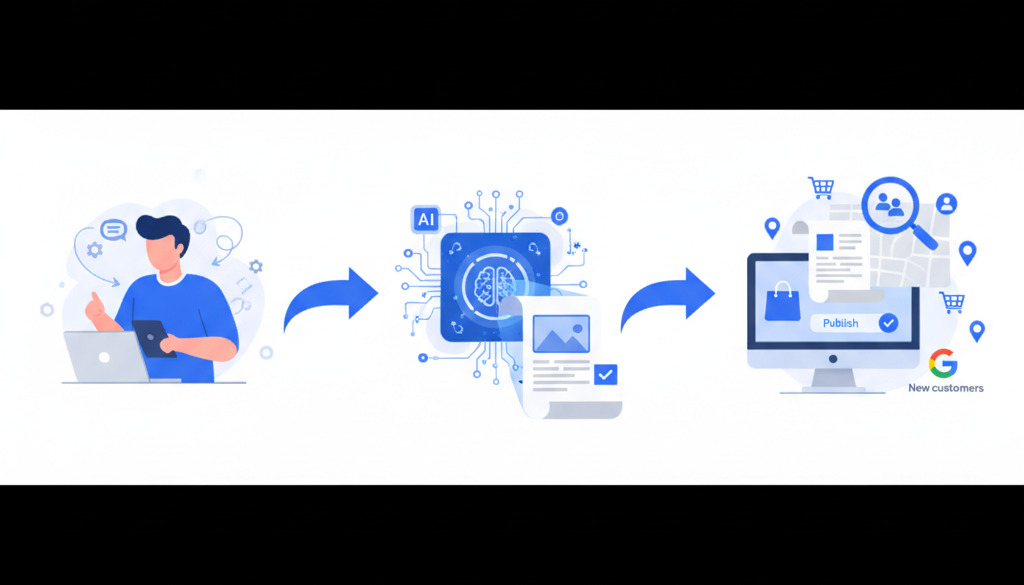
Artificial intelligence is no longer science fiction; it’s a practical tool that can revolutionize your content workflow. AI tools can help at nearly every stage of the content creation process, making it faster and more efficient for busy entrepreneurs.
Modern AI can assist in:
- Keyword Research and Content Ideation: AI can analyze competitors and search trends to suggest blog post topics and keywords with high potential.
- Overcoming Writer's Block: AI can generate outlines or even complete first drafts of articles, product descriptions, and ad copy. This gives you a strong starting point to refine and personalize.
- Scaling Content Production: The ability to generate content "percek alatt" (in minutes), as the most effective AI platforms do, means you can move from publishing one article a month to publishing multiple times a week, dramatically accelerating your SEO results. For deeper insights, learn about how AI can transform your blog strategy.
The key is to use AI as a powerful assistant, not a complete replacement for human oversight. The best approach is to let AI handle the heavy lifting of research and drafting, while you provide the final touch of brand voice, expertise, and personalization.
Future-Proofing Your Shopify SEO Content Strategy
The world of SEO is dynamic. To ensure your efforts today continue to pay dividends tomorrow, you need to adopt a future-focused mindset. This means staying informed about major Google algorithm updates and evolving best practices. Following reputable SEO blogs and resources can help you stay ahead of the curve.
The landscape of search itself is changing. The rise of voice search ("Hey Google, where can I buy handmade leather wallets?") and generative AI in search results means that conversational, question-based content is more important than ever. Your content strategy should increasingly focus on answering questions your customers might speak rather than type.
Ultimately, the most durable SEO strategy is to build a strong brand that people trust and to create a fantastic user experience on your site. Search engines are getting smarter at recognizing and rewarding genuine quality. Focus on serving your customer with valuable content and a seamless shopping experience, and Google will likely reward you for it in the long run.
Conclusion
Building a powerful Shopify SEO content strategy is not an overnight task, but it is one of the most sustainable and profitable investments you can make in your business’s future. It’s about creating a system that continuously attracts your ideal customers, builds trust, and drives sales without a constant ad spend.
By laying a solid foundation with keyword research, optimizing your core pages, and strategically using blog content to solve customer problems, you create an asset that grows in value over time. Remember to focus on the key pillars: creating high-quality, relevant content, ensuring your site is technically sound, and building authority through ethical off-page SEO. Don't let the challenge of consistency hold you back; leverage modern tools and services to automate and scale your efforts.
The journey starts today. Take the first step by reviewing your product pages or brainstorming your first blog post. By implementing these strategies, you can turn your Shopify store into a powerful magnet for organic traffic and unlock a new level of sustainable growth.
Frequently Asked Questions
Q1: How long does it take for Shopify SEO to work?
A1: SEO is a long-term strategy. While you might see some minor improvements in a few weeks, it typically takes 4 to 6 months to see significant, measurable results in terms of traffic and rankings. Consistency is key; the efforts you put in today will pay off in the coming months. The exact timeline depends on your industry's competitiveness, your starting point, and the intensity of your efforts.
Q2: Do I really need a blog on my Shopify store?
A2: Yes, absolutely. While you can rank with just product and category pages, a blog is essential for a comprehensive SEO strategy. It allows you to target informational keywords, answer customer questions, build authority in your niche, and attract customers who are not yet ready to buy. It's one of the most effective ways to fill the top of your sales funnel.
Q3: Is Shopify good for SEO out of the box?
A3: Shopify provides a solid technical foundation for SEO. It handles many of the basics well, such as generating sitemaps and offering a mobile-responsive design. However, it is not a complete SEO solution on its own. You are still responsible for all the on-page and off-page SEO strategies, including keyword research, content creation, and link building, to truly succeed.
Q4: Can I do Shopify SEO myself?
A4: Yes, you can. For business owners who have the time and willingness to learn, managing your own Shopify SEO is achievable. This guide provides the strategic blueprint. However, for many busy entrepreneurs, the time cost is too high. In those cases, using AI-powered services or hiring an expert can be a more efficient path to getting results without sacrificing focus on your core business operations.
Q5: What's more important: product page SEO or blog SEO?
A5: They are both critically important and serve different purposes. Product page SEO is crucial for capturing customers who are at the bottom of the funnel and ready to purchase (transactional intent). Blog SEO is essential for attracting customers at the top of the funnel who are researching solutions (informational intent). A complete strategy needs both; they work together to guide a customer from awareness to purchase.
→ Read the full Shopify & Ecommerce guide
Keep reading
Hand-picked guides that go deeper — open the one you need next:
- Increase Shopify Sales with AI-Driven Buyer Intent Blog Posts
- Shopify Blog SEO: AI Articles for More Traffic & Sales
- Shopify AI Strategy: Mastering E-commerce Automation
- Shopify AI Strategy: E-commerce Automation Advanced
→ Read the full Shopify & Ecommerce guide