
Shopify Blog SEO: AI Articles for More Traffic & Sales

Key Takeaways
- The Challenge for Owners: Shopify store owners, especially those established in their business but not digital natives, often lack the time and expertise for consistent blog content creation, which is crucial for organic growth.
- Automation is the Solution: Shopify blog SEO automation streamlines the entire content lifecycle—from keyword research and AI-powered article writing to on-page optimization, scheduling, and performance tracking.
- AI Content Generation: Modern AI tools can draft high-quality, SEO-optimized blog posts in minutes, solving the problem of writer's block and content scarcity. This allows you to maintain a consistent publishing schedule effortlessly.
- Focus on Strategy, Not Tasks: Automation frees you from tedious manual tasks, allowing you to focus on high-level business strategy while your blog works in the background to attract customers through Google.
- Getting Started: You can start by automating one part of your process. Services exist that can generate professional SEO articles for you, with some offering free trials to prove their value before you commit.
The Content Conundrum for Shopify Store Owners
As a seasoned business owner, you know the value of a strong market presence. You've built your Shopify store, curated your products, and mastered the art of running your company.[1] Yet, there's a persistent challenge that many successful entrepreneurs face: getting found on Google. Organic traffic, the lifeblood of sustainable online growth, is powered by content. Specifically, a high-quality, consistently updated blog.
Why Your Shopify Store Needs a Blog
A blog is your direct line to potential customers. It builds brand authority, answers common questions, and, most importantly, provides Google with valuable content to rank in search results. Every article is a new opportunity for a customer to discover your brand. However, the reality for many established business owners is that creating this content is a significant burden.
The Common Pain Points
If you feel overwhelmed by the thought of blogging, you're not alone. The most common hurdles include:
- Lack of Time: Your primary focus is running your business—managing inventory, customer service, and sales. You simply don't have hours to spare for writing.
- Lack of SEO Expertise: Search Engine Optimization (SEO) is a complex, ever-changing field. Knowing which keywords to target and how to structure an article for Google is a specialized skill.
- Content Creation Burnout: Staring at a blank page and trying to come up with fresh ideas is draining. This creative pressure is an unwelcome addition to an already full plate.
This leads to a massive missed opportunity. Without a steady stream of new blog content, your store becomes less visible on Google, directly impacting your discoverability and, ultimately, your sales.
Defining "Shopify Blog SEO Automation"
When most people hear "automation," they think of simply scheduling posts in advance. However, true Shopify blog SEO automation is far more comprehensive. It's about creating a streamlined, intelligent system that handles the most demanding aspects of your content strategy with minimal manual intervention.
What It Really Means
It involves using modern tools, particularly Artificial Intelligence (AI), to systematize the entire content lifecycle. This includes:
- Automated keyword research and topic discovery.
- AI-powered generation of article drafts.
- Automatic on-page SEO checks and optimization.
- Intelligent scheduling and content planning.
- Streamlined performance reporting.
The ultimate goal is to establish a consistent flow of high-quality, SEO-optimized blog articles without it consuming your valuable time. It’s about turning your blog from a nagging chore into a powerful, hands-off growth engine for your business.
Debunking an Old Myth
A common misconception is that automation leads to low-quality, robotic content. While this may have been true in the past, today's AI is incredibly sophisticated. Automation doesn't mean sacrificing your brand's voice or authenticity; it means leveraging powerful tools strategically so you can focus on the big picture.
The Pillars of Effective Shopify Blog SEO
To understand how automation helps, it's useful to know the four fundamental pillars of a successful blog SEO strategy. Automation tools are designed to assist with each of these areas.
1. Keyword Research
This is the foundation. It’s the process of understanding the exact words and phrases your potential customers are typing into Google when looking for products or solutions like yours. Effective keyword research ensures your articles target topics that have real search demand.
2. Content Creation
Once you have your keywords, you need to produce content that is valuable, engaging, and thoroughly answers the searcher's query. High-quality content is what earns you high rankings on Google and builds trust with your audience.
3. On-Page Optimization
This involves structuring your blog post in a way that search engines can easily understand. It includes optimizing your title, headings, meta description, images, and internal links. Proper on-page SEO is critical for signaling relevance to Google.
4. Off-Page Signals
This refers to activities outside of your website that build its authority and trust, primarily through backlinks (links from other websites to yours). While harder to automate directly, a consistent output of excellent content—powered by automation—is the single best way to attract these valuable signals naturally.
Identifying Key Automation Opportunities in Shopify Content
For the busy Shopify owner, the content creation process is filled with time-consuming, repetitive tasks. By pinpointing these bottlenecks, you can see exactly where automation offers the biggest return on your time.
Consider the manual effort involved in:
- Keyword Brainstorming: Hours spent searching for topic ideas and validating whether people are actually searching for them.
- Drafting Content: The sheer time it takes to write a comprehensive, 1500-word article from scratch can be anywhere from four to eight hours.
- On-Page SEO Checks: Manually checking title length, writing a meta description, ensuring keyword usage is natural, and finding internal link opportunities for every single post.
- Image Optimization: Finding relevant images and remembering to write descriptive alt text for each one.
When you add this up, the time commitment becomes a significant barrier. Automation tools are designed specifically to tackle these tasks, potentially reclaiming hundreds of hours per year that can be reinvested into growing your business.
AI-Powered Content Generation: Your First Automation Step
The single most impactful step you can take in automating your blog is to leverage AI for content generation. For business owners who don't have the time or inclination to write, this technology is a game-changer. It addresses the biggest bottleneck—the writing itself—head-on.
How AI Can Help
Modern AI writing platforms can transform your content process. They can:
- Generate Topic Ideas: Simply provide a basic keyword, and the AI can suggest dozens of blog post titles and angles.
- Draft Complete Articles: This is the core benefit. AI can produce a well-structured, comprehensive blog post in minutes, not hours.
- Overcome Writer's Block: By providing a solid first draft, AI eliminates the challenge of starting with a blank page. You can then review and edit the content to match your brand's voice.
For entrepreneurs who need an effective, hands-off solution, services have emerged that leverage this technology specifically for business growth. These platforms are designed for people who want results without the learning curve. For instance, services that promise "More Customers From Your Blog" use their own proprietary artificial intelligence to generate professional SEO articles directly for your website. The process is so streamlined it feels like magic, and the best part is they often let you test the waters first—some even offer to write your first five posts for free.
Strategic Keyword Research Automation Tools
Great content starts with great keywords. Manually digging through data to find underserved keywords in your niche is tedious. Automation tools, especially those powered by AI, have revolutionized this process, making it faster and more strategic.
Finding Hidden Opportunities
Automated keyword tools can analyze search patterns and competitor weaknesses in seconds. They help you identify long-tail keywords—longer, more specific phrases—that indicate a user is closer to making a purchase. Targeting these can lead to higher-quality traffic.
Integrating Keyword Insights with AI Content Generation
The true power of automation is revealed when you connect your keyword strategy to your content creation. Many AI writing platforms allow you to input your target keyword, and they will not only write the article but also ensure the keyword is naturally integrated into the text. This seamless workflow is a core principle of an efficient Shopify AI blog content strategy.
Streamlining On-Page SEO with Automation
Once your article is written, ensuring it is perfectly optimized for search engines is the next critical step. This used to be a manual checklist of tasks for every post, but today, many of these checks can be automated.
Look for tools and Shopify apps that can:
- Generate SEO-Friendly Metadata: Automatically create compelling title tags and meta descriptions that are within the ideal length and include your target keyword.
- Analyze Content Structure: Provide real-time feedback on keyword density, readability scores, and heading structure to ensure your content is easy for both users and Google to read.
- Suggest Image Alt Text: Many AI tools can "see" an image and suggest descriptive alt text, which is important for accessibility and image search rankings.
This level of automation ensures that no crucial on-page element is ever missed, maintaining a high standard of quality across your entire blog.
Automating Blog Content Planning and Scheduling
Consistency is king in content marketing. Publishing on a regular, predictable schedule sends positive signals to Google and keeps your audience engaged. Automation is the key to achieving this without the daily hassle.
Using content planning tools, you can build out an entire editorial calendar weeks or even months in advance. These platforms can integrate with your keyword research to help you plan a logical flow of content that covers important topics seasonally or as part of a larger marketing campaign. Once the content is created (often with AI assistance), you can use Shopify's built-in scheduling feature or more advanced apps to set your blog to run on autopilot, publishing articles at the optimal days and times for your audience.
Implementing Smart Internal Linking Strategies Automatically
Internal links—links from one page on your site to another—are incredibly powerful for SEO. They help Google understand the structure of your site, pass authority between pages, and guide users to more relevant content, keeping them on your site longer.
However, manually finding relevant opportunities to link between posts is time-consuming. This is another area where automation shines. There are Shopify apps and other SEO tools that can automatically scan your new blog post and suggest a list of older, relevant articles on your site to link to. Some can even insert the links for you. This simple automated task can significantly boost the SEO performance of both your new and old content.
Measuring Success: Automated SEO Reporting for Shopify Blogs
As a business owner, you need to know your return on investment. The beauty of digital marketing is that everything can be measured, but manually compiling reports is another time-drain. Automation can deliver the insights you need directly to your inbox.
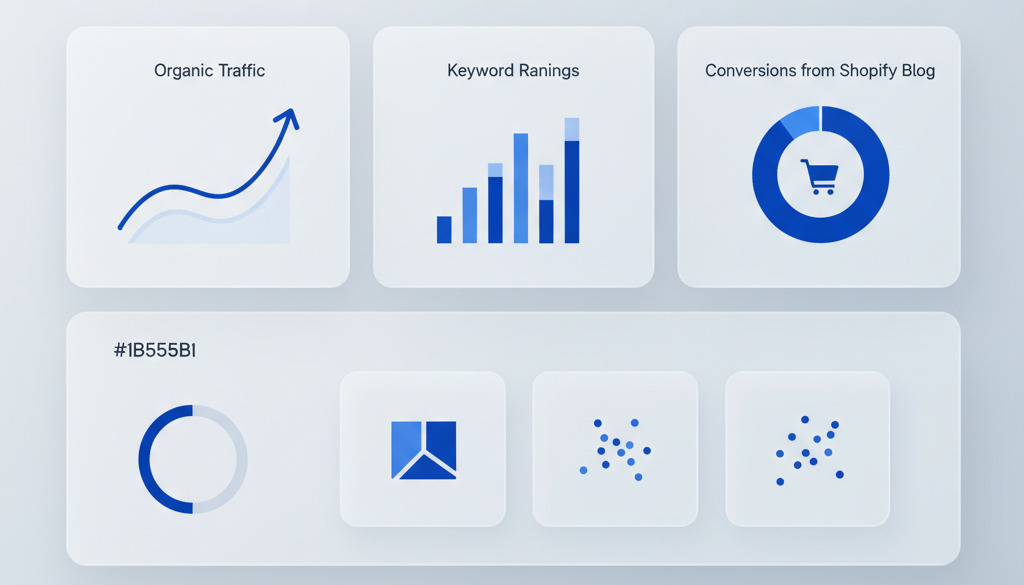
By connecting your Shopify store to Google Analytics and Google Search Console, you can use automated reporting tools to track the metrics that matter:
- Organic Traffic Growth: How many visitors is your blog bringing in from search engines?
- Keyword Rankings: Are your articles ranking on the first page of Google for your target keywords?
- Conversions and Sales: How many blog readers go on to purchase a product?
Automated dashboards and email reports allow you to see what's working at a glance, enabling you to make strategic decisions without getting lost in spreadsheets.
The Power of AI-Driven Content: Beyond Just Writing
The most advanced AI tools offer value far beyond just drafting an initial article. They are becoming strategic partners in your entire content ecosystem.
For instance, an AI can help you with:
- Content Refinement: Analyze your existing blog posts and suggest improvements for better SEO performance or higher conversion rates.
- Content Repurposing: Automatically summarize a long blog post into key bullet points for an email newsletter or generate a series of social media snippets from a single article.
- Audience Engagement Analysis: Some tools can analyze comments and on-page behavior to inform your future content strategy, helping you create more of what your audience loves.
This is the core value proposition of a truly integrated AI solution. It's an engine that not only produces professional SEO articles almost like magic for your website but also helps you get the most value out of them, ensuring that customers find you on Google. The goal of a comprehensive AI content keyword research strategy is to fuel this entire process, from discovery to conversion.
Technical SEO Considerations for Automated Blogging
While content automation handles the articles themselves, it's important that your Shopify store's technical foundation is solid. A fast, mobile-friendly website is essential for a good user experience and strong Google rankings.
Shopify Apps that Enhance Technical SEO Automation
Fortunately, many technical aspects can also be monitored and managed with automation. Consider using Shopify apps that perform automated checks for:
- Site Speed: Identify images or code that are slowing down your site.
- Mobile-Friendliness: Ensure your theme and content display perfectly on all devices.
- Broken Links: Automatically scan your site for broken links that can harm user experience and SEO.
You should also ensure your sitemap is being automatically generated and submitted to Google, which is a standard feature in Shopify. These technical checks ensure that your beautifully automated content has the best possible chance to rank.
Building Authority: Automating Off-Page SEO Signals (Partially)
While earning backlinks from authoritative sites is difficult to fully automate, tools can certainly streamline the process and amplify your efforts.
The most effective way to automate this area is through the consistent output of high-quality content. When you publish valuable articles regularly (made possible by AI), you naturally increase your chances of earning links. You can assist this process with:
- Automated Social Media Sharing: Connect your blog to your social media channels so every new post is shared automatically, increasing its visibility.
- Brand Mention Monitoring Tools: Set up automated alerts to notify you whenever your brand is mentioned online. This often presents an opportunity to reach out and request a formal backlink.
Ultimately, automation in content creation is the engine that drives the natural acquisition of these crucial off-page signals.
Choosing the Right Automation Stack for Your Shopify Store
The market is filled with tools, from all-in-one SEO platforms to dedicated AI writers and specialized Shopify apps. How do you choose?
Evaluating Your Needs
Start by identifying your biggest pain point. Is it writing? Keyword research? Reporting? Prioritize tools based on your specific needs and budget. For many business owners, the most logical starting point is a service that handles the writing itself. When evaluating these, look for social proof. For example, finding a solution that is already trusted by over 500 companies provides a strong signal of reliability and effectiveness.
Considering Integrations
The best automation stacks consist of tools that work together. Look for solutions that can integrate with your Shopify store, your analytics platforms, and each other to create a seamless workflow from end to end.
Best Practices for Overcoming the Learning Curve
Adopting new technology can feel daunting, but you don't have to do everything at once. A gradual approach is the most effective way to integrate automation into your business.
- Start Small: Choose one aspect of your content process to automate first. Content generation is often the most impactful place to begin.
- Always Review and Refine: Treat AI-generated content as a high-quality first draft. Always give it a quick review to add your brand's unique perspective and ensure factual accuracy. This human-in-the-loop approach produces the best results.
- Focus on Strategy: The goal of tools is to free you up to think strategically. Use your newfound time to understand your customers better and plan your overarching content direction.
Leveraging Expert Support When Needed
Don't be afraid to lean on the experts. Many automation tools and services come with excellent customer support. Furthermore, if you're implementing a comprehensive strategy, consulting with an SEO expert can ensure you're setting up your automated systems for maximum success from day one.
Potential Pitfalls to Avoid in Blog SEO Automation
Automation is a powerful tool, but like any tool, it can be misused. To maintain quality and protect your brand reputation, be mindful of these potential pitfalls:
- Over-reliance Without Oversight: Never publish an AI-generated article without a final human review. This is crucial for catching potential errors and ensuring the tone aligns with your brand.
- Unnatural Keyword Usage: Poorly configured automation can lead to "keyword stuffing," which creates a bad reading experience and can be penalized by Google. Modern AI is much better at this, but a human check is still wise.
- Neglecting User Experience: SEO automation should never come at the expense of the reader. The goal is to create valuable content that helps people. If the content is not genuinely useful, it will not succeed in the long run.
- Lack of Originality: While AI is great for creating well-researched articles, be sure to inject your own unique insights, experiences, and data points to make your content stand out.

The Future of Automated SEO for Shopify: Trends to Watch
The field of AI and SEO automation is evolving at a breakneck pace. For Shopify owners, this means even more powerful and accessible tools are on the horizon. Key trends to watch include:
- Hyper-Personalization: AI models will become even better at tailoring content to individual user preferences and search histories.
- Predictive SEO Analytics: Tools will move from reporting on past performance to predicting which keywords and topics will trend in the future.
- Full-Funnel Integration: AI will be integrated across the entire customer journey, from the initial blog discovery to post-purchase follow-up.
- The Rise of the Human Strategist: As AI handles more of the tactical execution, the role of the business owner or marketer will shift to that of a high-level strategist, guiding the AI toward business goals.
Case Study: A Shopify Store Reimagines Its Content Strategy (Hypothetical)
Imagine a Shopify store selling high-end kitchen gadgets. The owner, a passionate expert in her field, struggled to find time to write. Her blog was updated sporadically, and her store had almost no visibility on Google.
The Problem: Inconsistent content production led to low organic traffic and minimal sales attributed to the blog. The owner was too busy managing the business to become an SEO expert and writer.
The Solution: She adopted an AI content automation service. She used it to generate three high-quality, SEO-optimized articles per week, targeting keywords like "best blender for green smoothies" and "how to care for cast iron pans." She also used an app to automate her internal linking.
The Results: Within three months, her organic blog traffic increased by over 400%. Several of her articles ranked on the first page of Google. Most importantly, she could directly attribute a 15% increase in monthly revenue to sales originating from her newly automated blog. This is a prime example of successful Shopify blog SEO for a small business.
Your Action Plan: Implementing Shopify Blog SEO Automation Today
Ready to reclaim your time and unlock organic growth? Here is a simple, five-step action plan to get you started:
- Audit Your Process: Take 30 minutes to map out your current content process (or lack thereof). Identify the biggest bottleneck. For most, it will be the writing itself.
- Research Core Tools: Explore an AI content generation service. Look for one designed for busy business owners that offers a free trial or a starter package.
- Launch a Pilot Project: Don't try to automate everything at once. Commit to generating your first 3-5 blog posts using an AI tool. If a service offers your first five posts for free, take advantage of it.
- Set Up Basic Reporting: Install Google Analytics on your Shopify store and familiarize yourself with the organic traffic report. This will be your benchmark for success.
- Iterate and Scale: Once you see the results from your pilot project, you can build out a full content calendar and scale your automation efforts, knowing you have a proven system in place.
Conclusion: More Growth, Less Hassle
For established Shopify store owners, the question is no longer *if* you should have a blog, but *how* you can manage one effectively without sacrificing your sanity. SEO automation, powered by artificial intelligence, is the definitive answer. It transforms content marketing from a time-consuming burden into a predictable, scalable engine for organic growth.
By automating the repetitive tasks of keyword research, writing, and optimization, you free yourself to do what you do best: run your business. You can finally have a powerful blog that works for you 24/7, allowing customers to find you on Google, building your brand authority, and driving sales—all with minimal effort on your part. It's time to embrace the future of content and let automation unlock the next stage of your store's growth.
Frequently Asked Questions
1. Is AI-generated content penalized by Google?
No. Google's official stance is that they reward high-quality content, regardless of how it is produced. Their focus is on content that is helpful, reliable, and created for people, not for search engines. Modern AI tools, when used correctly with human oversight, can produce content that meets and exceeds these standards.
2. How much time can I realistically save with automation?
The time savings are significant. A single blog post that might take 4-8 hours to write manually can be drafted by an AI in 5-10 minutes. When you factor in research, optimization, and scheduling, you could be saving anywhere from 10 to 20 hours per month while producing even more content than before.
3. Do I need to be a technical expert to use these tools?
Not at all. The best automation tools and services are designed specifically for non-technical business owners. They feature user-friendly interfaces and straightforward workflows. The goal of these platforms is to simplify SEO and content creation, not to add another layer of technical complexity to your life.
4. What is the difference between blog automation and just hiring a freelance writer?
The main differences are speed, scalability, and cost. Hiring a writer involves a lengthy process of finding, vetting, and managing them. It can also be expensive, with costs per article ranging from $100 to $500+. Automation provides high-quality drafts instantly and at a fraction of the cost, allowing you to scale your content production up or down on demand without managing personnel.
5. Can I use automation for my product pages too?
Yes. While this article focuses on blogs, many AI writing tools are also excellent for generating compelling, SEO-optimized product descriptions. This can be another huge time-saver, especially for stores with large, frequently changing inventories.
6. How do I ensure the AI content matches my brand's voice?
The best practice is to use a "human-in-the-loop" approach. Treat the AI-generated text as a very strong first draft. Your role is to spend a few minutes reviewing it, tweaking phrasing, and adding your unique brand anecdotes or personality. This combines the speed of AI with the authenticity of your brand voice for the best possible result.
Keep reading
Hand-picked guides that go deeper — open the one you need next:
- Mastering Shopify Buyer Intent Content for Higher Sales
- Shopify AI Blog Content: A Strategic Guide for Merchants
- Shopify AI Content for E-commerce Success
- Shopify Store Owners: Maximize Sales with AI-Powered Blog Content
→ Read the full Shopify & Ecommerce guide