
Shopify AI Content for E-commerce Success

Key Takeaways
- Embrace Efficiency: AI content tools can dramatically reduce the time and effort required to create high-quality product descriptions, blog posts, and marketing copy for your Shopify store.
- Boost SEO Performance: AI helps generate a consistent stream of fresh, keyword-optimized content, signaling relevance to search engines like Google and improving your organic rankings.
- Scale Your Marketing: Overcome the limitations of time and resources by using AI to scale content production, allowing you to engage customers across multiple channels like blogs, email, and social media.
- Human Oversight is Crucial: AI is a powerful assistant, not a replacement for human strategy. Always review, edit, and refine AI-generated content to ensure accuracy, brand alignment, and a genuine connection with your audience.
- The Future is Agentic: The next wave of e-commerce involves AI agents shopping on behalf of consumers. High-quality, well-structured content is essential to ensure these agents discover and choose your products.
Understanding the Core of AI in E-commerce Content Creation
As a business owner, you're likely familiar with the concept of Artificial Intelligence (AI) in a broad sense, but its specific role in content creation can seem complex.[2] In simple terms, AI content generation uses sophisticated computer programs, built on Natural Language Processing (NLP) and machine learning, to write human-like text. Think of it as a highly advanced assistant that can understand a request—like "write a product description for a leather wallet"—and then produce a detailed, readable, and relevant piece of text in seconds.
How AI Differs from Traditional Methods
Traditionally, creating content meant writing it yourself, hiring a freelance writer, or working with a marketing agency. These methods have their merits but often come with significant trade-offs in time, cost, and scalability. AI introduces a new paradigm:
- Speed: AI can generate a first draft of a blog post or a dozen product descriptions in the time it takes to write a single email.
- Scale: The ability to produce a vast quantity of content is unparalleled. This is crucial for keeping your Shopify store's blog active or populating a large product catalog.
- Cost-Effectiveness: While there are subscription costs for tools or services, they often represent a lower long-term investment compared to the recurring expense of hiring writers for every single task.
The technology has evolved rapidly from simple text spinners to sophisticated systems that can adopt specific tones of voice, research topics, and structure information logically, making it a viable tool for serious business applications.
Why Shopify Stores Need AI-Powered Content Strategies
Running a Shopify store is more competitive than ever. Standing out requires more than just great products; it requires discoverability. The primary way customers discover new stores online is through search engines, and search engines run on content. This creates a significant challenge for busy entrepreneurs who are already juggling inventory, customer service, and daily operations. Many recognize the importance of online content but simply lack the time, energy, or specific expertise to do it well.
Bridging the Critical Content Gap
This is what we call the "content gap"—the space between knowing you need to publish content and having the capacity to do it. An AI-powered strategy is the bridge over that gap. It directly addresses the most common pain points for store owners:
- Lack of Time: AI automates the most time-consuming parts of content creation.
- Lack of Resources: It provides a cost-effective alternative to building an in-house content team.
- Lack of SEO Knowledge: Modern AI tools are designed with search engine optimization in mind, helping you target relevant keywords without needing to be an SEO expert.
Fortunately, innovative solutions are emerging to bridge this gap, offering a streamlined approach to professional SEO content creation. Some services are built around the idea of getting you 'more customers from your blog by writing the SEO articles for you,' blending powerful AI with expert oversight to deliver business-driving results with minimal effort on your part.
The Multifaceted Benefits of AI for Shopify Content
Integrating artificial intelligence into your content workflow isn't just about saving time; it offers a spectrum of strategic advantages that can directly impact your bottom line. For a Shopify merchant, these benefits can be transformative, turning content from a chore into a growth engine.
Increased Efficiency and Speed
The most immediate benefit is a dramatic boost in efficiency. An AI tool can produce first drafts of blog articles, email campaigns, or social media posts in minutes, not hours. This frees you up to focus on other critical aspects of your business, like product development and customer engagement. You can move from idea to published content at a velocity that is impossible to achieve manually.
Unprecedented Scalability
Imagine launching a new collection with 50 products. Writing unique, compelling descriptions for each one is a monumental task. With AI, you can generate all 50 in an afternoon. This ability to scale content production allows you to maintain a vibrant, active online presence—whether that means publishing daily blog posts, updating social media feeds, or keeping your entire product catalog fresh and engaging.
Significant Cost-Effectiveness
When you compare the monthly subscription for a high-quality AI content service to the salary of a full-time writer or the fees of a marketing agency, the cost savings become clear. AI provides access to enterprise-level content output for a fraction of the price, making it an accessible solution for small and medium-sized businesses looking to compete with larger players.
AI Content's Impact on Shopify SEO Performance
Search Engine Optimization (SEO) is the foundation of organic growth for any e-commerce store. It's how potential customers find you on Google when they're looking for products you sell. AI content is uniquely positioned to enhance your Shopify blog SEO and overall site performance.
Mastering Keyword Integration
AI algorithms are adept at identifying relevant keywords and seamlessly incorporating them into your content. They can analyze top-ranking articles to understand what terms are driving traffic and then craft text that includes these keywords in a natural, reader-friendly way. This helps search engines understand what your pages are about and rank them for the right queries.
Content Freshness and Regularity
Google's algorithm tends to favor websites that are updated regularly with fresh, relevant content. The logistical challenge of publishing consistently is a major hurdle for many store owners. AI solves this by enabling you to maintain a steady publishing schedule for your blog, which signals to Google that your site is active and a valuable resource for users.
Targeting High-Intent Long-Tail Keywords
AI excels at creating content around very specific, "long-tail" keyword phrases (e.g., "handmade vegan leather crossbody bag for travel"). These queries are often used by shoppers who are further along in the buying journey and have a higher intent to purchase. By generating niche articles or detailed product descriptions, AI helps you capture this highly qualified traffic.
Practical Applications: Types of Shopify Content AI Can Generate
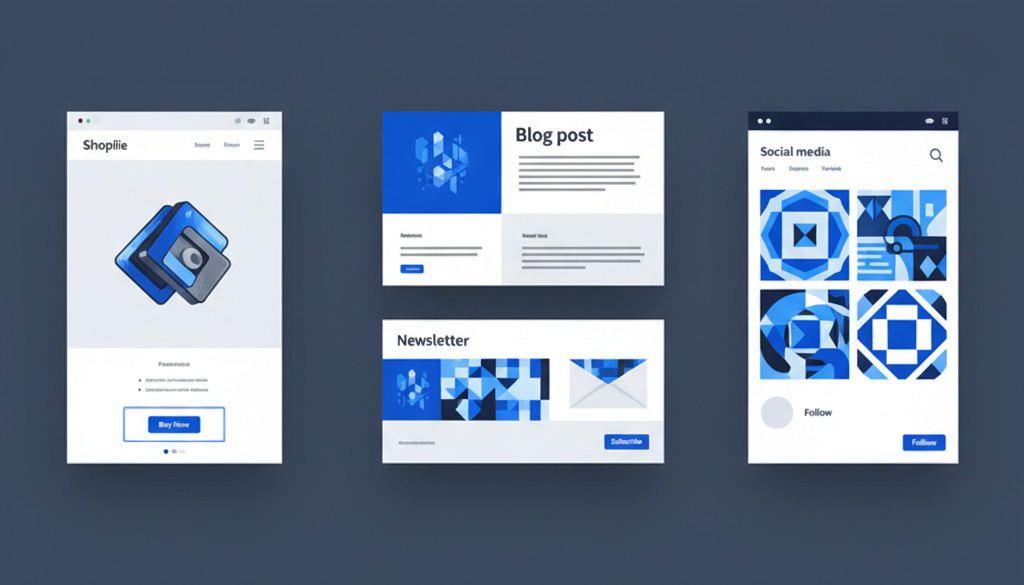
The power of AI extends across virtually every type of content your Shopify store needs. By automating the creation process, you can ensure a consistent and high-quality presence across all customer touchpoints.
Persuasive Product Descriptions
This is one of the most powerful uses of AI for e-commerce. You can input key features and a target audience, and the AI will generate unique, benefit-driven descriptions that entice customers to buy. This saves countless hours, especially for stores with large inventories.
SEO-Optimized Blog Posts and Articles
Use AI to generate informative blog posts that answer common customer questions, highlight your product use cases, or discuss industry trends. This not only drives traffic but also establishes your brand as an authority in your niche.
Engaging Email Marketing Copy
From promotional newsletters to abandoned cart recovery sequences, AI can draft compelling email copy designed to convert. It can generate subject lines, body text, and calls-to-action that grab attention and encourage clicks.
Dynamic Social Media Updates
Quickly create a batch of social media posts for Facebook, Instagram, or X (formerly Twitter). AI can adapt a core message for different platforms, helping you maintain an active and engaging social presence to drive traffic back to your store.
Choosing the Right AI Content Tools for Your Shopify Store
The market for AI content generation is booming, and selecting the right tool or service can feel overwhelming. The best choice depends on your specific needs, budget, and how hands-on you want to be.
Key Features to Look For
When evaluating different options, consider the following features:
- Quality of Output: Does the generated text sound natural and require minimal editing?
- Ease of Use: Is the interface intuitive for someone who isn't a tech expert?
- SEO Capabilities: Does the tool offer features for keyword research and on-page optimization?
- Customization: Can you define a brand voice, tone, and style?
- Shopify Integration: Does the tool connect directly with your store for a seamless workflow?
For many business owners, the most practical approach is not to become an expert AI user overnight, but to partner with specialized services. Some solutions, for example, leverage their own advanced AI to generate professional SEO blog articles for your website in minutes, removing the learning curve entirely.
Evaluating Return on Investment (ROI)
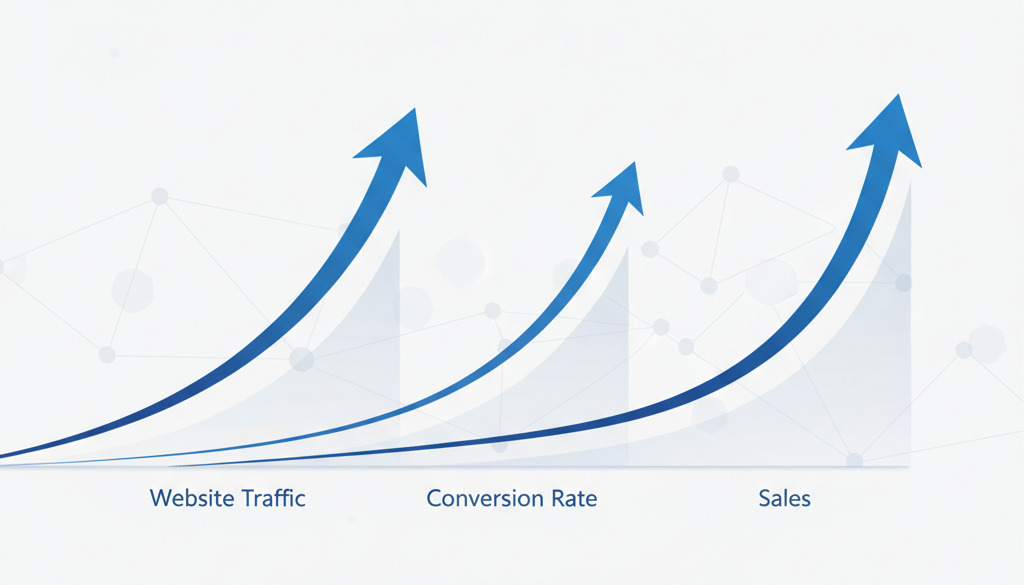
The true value of an AI tool is measured in more than just cost. Consider the time saved, the increase in website traffic from improved SEO, and the potential rise in conversion rates. Platforms that specialize in content for e-commerce, such as a dedicated AI product description generator, often provide a clearer and more direct ROI.
Integrating AI Content into Your Shopify Workflow: A Step-by-Step Guide
Adopting AI successfully is about more than just subscribing to a tool. It requires a strategic approach to integrate it into your existing processes.
Step 1: Define Your Content Strategy and Goals
Before you write a single word, clarify what you want to achieve. Are you trying to increase organic traffic, improve conversion rates on product pages, or build a community through your blog? Your goals will determine what type of content you need to create.
Step 2: Select and Set Up Your Tool or Service
Based on your goals and budget, choose the right solution. This could be a hands-on AI writer or a "done-for-you" service that handles the creation and optimization for you. Take the time to set up your brand voice and other preferences.
Step 3: Master the Art of the Prompt
If you're using a hands-on tool, your results will depend on the quality of your instructions, or "prompts." Be specific. Instead of "write a blog post about coffee," try "write a 1000-word blog post for beginners on the differences between light roast and dark roast coffee, with a friendly and informative tone."
Step 4: Implement Human Review and Oversight
This is the most critical step. Never publish AI-generated content without a thorough review. Check for factual accuracy, edit for tone, and inject your unique brand personality. The AI provides the clay; the human provides the artistry.
The Crucial Role of Human Editing and Quality Assurance
While AI is incredibly powerful, it is not infallible. It lacks genuine human experience, emotional understanding, and the ability to create truly original, groundbreaking ideas. Relying solely on raw AI output is a recipe for generic, soulless content that fails to connect with your audience. The human touch is your competitive advantage.
Best Practices for Editing AI Output
- Fact-Check Everything: AI can sometimes "hallucinate" or invent facts, statistics, or sources. Always verify any claims before publishing.
- Refine the Voice: Ensure the text aligns perfectly with your brand's personality. Is your brand playful, luxurious, or professional? Edit the language to match.
- Enhance for Readability: Break up long paragraphs, add headings, and use bullet points to make the content easy to scan.
- Add Personal Stories and Insights: Inject your own experiences, customer testimonials, or unique perspectives. This is what builds trust and sets your content apart. As you refine this process, you will be on your way to mastering AI article writers for engaging content.
Ethical Considerations and AI Content Authenticity
As AI becomes more prevalent, it's important to use it responsibly and ethically. Your brand's reputation depends on trust and authenticity, and how you use AI plays a significant role in that.
Transparency, Plagiarism, and Google's Stance
While there's no universal rule about disclosing AI usage, transparency can build trust. The primary concern for search engines like Google is not whether AI was used, but whether the content is high-quality, helpful, and provides a good user experience. Google's guidelines reward good content, regardless of how it's produced. Therefore, the focus should be on creating value, not on trying to "trick" algorithms. Always use plagiarism checkers to ensure the AI has not inadvertently produced text that is too similar to existing content.
Maintaining Brand Authenticity
Your brand is more than just products; it's a story and a set of values. Ensure your AI-assisted content strategy serves that identity. The goal is to use AI to amplify your authentic voice at scale, not to replace it with a generic, robotic one.
Real-World Examples: Shopify Stores Thriving with AI Content
While it's still an evolving field, many Shopify stores are already seeing tangible results from adopting AI content strategies. The successes often come from focusing on quantifiable improvements.
Case Study 1 (Hypothetical): The Niche Apparel Brand
A small Shopify store specializing in sustainable children's clothing was struggling to get noticed. By using an AI tool to generate SEO-optimized blog posts about topics like "choosing organic fabrics for babies" and "how to create a minimalist kids' wardrobe," they began to rank for valuable long-tail keywords. This drove a steady stream of traffic from new parents, resulting in a 30% increase in organic search traffic and a 15% lift in sales over six months.
Case Study 2 (Hypothetical): The Gadget E-commerce Store
An electronics store faced high cart abandonment rates. They implemented an AI-powered system to rewrite their product descriptions to be more benefit-focused and created a three-part automated email sequence for abandoned carts. The AI-drafted emails were personalized and highlighted key product features and customer reviews. This led to a 25% reduction in cart abandonment and recovered thousands of dollars in potentially lost revenue each month.
Overcoming Common Challenges with AI Content Creation
Transitioning to an AI-assisted workflow is not without its hurdles. Being aware of the common challenges can help you navigate them effectively.
- The Initial Learning Curve: It takes time to learn how to write effective prompts and understand the nuances of your chosen AI tool. Start small and be patient.
- Maintaining Uniqueness: Raw AI output can sometimes be generic. Effective editing and adding your own unique insights are essential to make the content stand out.
- Managing Costs: With many tools operating on a subscription model, it's important to choose a plan that aligns with your budget and content needs. Monitor your usage to ensure you're getting a positive return on your investment.
- Avoiding Over-Reliance: Remember that AI is a tool to support your strategy, not define it. Strategic thinking must still come from you.
The Future of AI in Shopify Content Marketing
The integration of AI into e-commerce is accelerating. A key concept on the horizon is "agentic commerce," where AI assistants will shop on behalf of consumers, autonomously researching products and making purchases. As noted by McKinsey, this could be a multi-trillion dollar opportunity. To prepare for this future, your store must have rich, structured, and comprehensive content that these AI agents can easily understand and analyze. This makes a robust AI-driven content strategy not just an advantage for today, but a necessity for tomorrow.
What to Expect Next
- Hyper-Personalization: AI will enable content and product recommendations tailored to each individual shopper in real time.
- Predictive Content Generation: AI may soon be able to anticipate market trends and automatically generate content for emerging topics before they peak.
- AI-Powered Optimization: Your website could dynamically adjust its own content based on live performance data to maximize conversions.
Measuring the Success of Your AI Content Strategy
To justify the investment in AI, you must track its impact. Focus on a few Key Performance Indicators (KPIs) to measure success:
- Organic Traffic: Is your search engine traffic increasing? Use Google Analytics to monitor this.
- Search Engine Rankings: Are you ranking for more keywords? Track your target terms using an SEO tool.
- Conversion Rate: Are more visitors making a purchase? Check your Shopify dashboard for this data.
- Time on Page: Are visitors engaging with your new content? Longer engagement times are a positive signal.
By regularly reviewing these metrics, you can understand what's working and use the data to refine your AI prompts and overall content strategy for continuous improvement.
When to Consider Professional AI Content Services
For many busy entrepreneurs, the idea of learning another new system, mastering prompt engineering, and managing an editing workflow can feel like just another item on an already overflowing to-do list. If this sounds familiar, it may be time to consider a professional service.
Recognizing Your Limits
Be honest about your available time and expertise. If you can't commit to the crucial human oversight step, a hands-on AI tool might produce subpar content that could hurt your brand more than it helps. This is precisely the scenario where a specialized service shines. For business owners who need professional, SEO-driven content without the steep learning curve, a service that handles everything for you is an ideal solution. You get expert-level, AI-assisted content that attracts customers, letting you focus on what you do best: running your business.
Getting Started with AI Content: A Practical Action Plan
Ready to take the leap? Here is a simple five-step plan to get started.
- Assess Your Needs: Identify your biggest content bottleneck. Is it blog posts? Product descriptions? Start there.
- Research Your Options: Explore different AI tools and services. Compare features and pricing to find one that fits your goals and budget.
- Start with a Pilot Project: Don't try to overhaul everything at once. Experiment with generating a few blog posts or descriptions for a single product category.
- Establish a Review Process: Create a simple checklist for editing and quality control. This ensures every piece of content is brand-aligned and high-quality before it goes live.
- Analyze and Iterate: After a month, review your KPIs. See what worked and use those insights to refine your approach for the next batch of content.
To de-risk your first step, consider looking for introductory offers. For instance, some specialized agencies allow you to test the waters with a set number of free posts, giving you a chance to experience the benefits of professionally generated SEO content firsthand.
Conclusion
In the competitive world of e-commerce, Artificial Intelligence is no longer a futuristic concept—it is a practical and powerful tool for growth. By leveraging AI to create content for your Shopify store, you can achieve a level of efficiency, scale, and SEO performance that was once out of reach for small and medium-sized businesses.[1] It allows you to bridge the content gap, save invaluable time, and compete on a larger stage.
However, success hinges on strategic implementation. AI is the engine, but you are the driver. By combining the speed of machine generation with the irreplaceable value of human insight, editing, and strategy, you can supercharge your online presence. Whether you choose to master a tool yourself or partner with a service that manages the complexity for you, the time to embrace AI-driven content is now. The future of your brand's organic growth depends on it.
Frequently Asked Questions
1. Will Google penalize my Shopify store for using AI-generated content?
No, Google will not penalize you simply for using AI. Google's official stance is that it rewards high-quality, helpful content that puts people first, regardless of how it was produced. The key is to use AI as a tool to create excellent content, not to generate low-quality, spammy articles. Always ensure your content is edited, accurate, and provides real value to the reader.
2. How much does it cost to use AI for content creation?
Costs vary widely. Standalone AI writing tools often have monthly subscription plans ranging from $20 to over $100, depending on the features and word limits. Done-for-you content services that use AI but include human strategy and editing will have a higher price point but deliver a finished, ready-to-publish product, saving you significant time.
3. Can AI really match my brand's unique tone of voice?
Modern AI tools are getting very good at mimicking a specific tone of voice, especially if you provide them with clear instructions and examples. However, it will rarely be perfect on the first try. The best practice is to have the AI generate a solid first draft and then have a human editor refine it to perfectly match your brand's unique personality and nuances.
4. What is the most impactful type of content to start creating with AI for a new Shopify store?
For a new store, the two most impactful areas are product descriptions and foundational blog posts. Unique, persuasive product descriptions are crucial for converting visitors into customers. Foundational blog posts targeting specific, long-tail keywords can start attracting organic traffic from search engines, which is vital for long-term, sustainable growth.
5. Do I still need to know SEO if I use an AI content tool?
While many AI tools have built-in SEO features that simplify the process, having a basic understanding of SEO is still highly beneficial. Knowing how to perform keyword research helps you provide better prompts to the AI. Understanding basic on-page SEO principles allows you to effectively edit and optimize the content the AI produces, leading to significantly better results.
6. Is AI-generated content considered plagiarism?
High-quality AI models are designed to generate original text and are not simply copying and pasting from other sources. However, because they learn from vast amounts of internet data, there is a very small chance of generating text that is unintentionally similar to existing content. It is always a best practice to run your final, edited content through a plagiarism checker before publishing to ensure its originality.
Keep reading
Hand-picked guides that go deeper — open the one you need next:
- Shopify E-commerce SEO: The Complete 2026 Guide
- Skyrocket Shopify Sales: AI & Buyer Intent SEO
- Shopify Sales Surge: Driving Traffic with AI-Powered Blog SEO
- Automated Content Publishing for E-commerce: Drive Sales on Shopify
→ Read the full Shopify & Ecommerce guide