
Shopify Sales Surge: Driving Traffic with AI-Powered Blog SEO

Key Takeaways
- Effortless Content Creation: AI tools can automate the entire blog writing process, from keyword research to drafting SEO-optimized articles, saving business owners dozens of hours per month.
- Enhanced SEO Performance: AI-powered content is built on a foundation of data-driven keyword strategies and on-page optimization, helping your Shopify store rank higher on Google for terms your customers are searching for.
- Significant Traffic Growth: A consistent, high-quality blog is one of the most effective ways to drive organic traffic, build brand authority, and attract a steady stream of potential customers to your Shopify store.
- Cost-Effective Marketing: Leveraging AI for content creation is significantly more affordable than hiring in-house writers or marketing agencies, providing a high ROI for small and medium-sized businesses.
- Competitive Advantage: With over 75% of businesses already using AI, adopting these tools is no longer optional—it's essential for staying relevant and competitive in the crowded e-commerce landscape.
As a Shopify store owner, you're an expert in your products and your industry. But becoming an expert in search engine optimization and content marketing can feel like a second full-time job. You know that getting noticed on Google is the key to sustainable growth, but the path to the front page seems complex and time-consuming. What if you could harness the power of a professionally written, SEO-optimized blog without sacrificing your time or budget? The solution is here, and it’s powered by Artificial Intelligence.
The challenge of driving organic traffic is universal. However, a recent survey from Shopify revealed a seismic shift: 75% of established business owners are already using AI tools, with content generation being the most common application. This isn't a futuristic trend; it's the new standard for business efficiency. A growing number of businesses are discovering that staying ahead in online visibility requires a consistent, high-quality blog. But who has the time? Thankfully, solutions like More Customers From Your Blog are emerging, leveraging AI to simplify this critical marketing function and make top-tier SEO accessible to everyone.
The Undeniable Power of a Shopify Blog for E-commerce Growth
Many e-commerce entrepreneurs focus solely on product pages and paid ads, overlooking one of the most powerful assets for long-term success: a blog. A blog isn't just a collection of articles; it's a strategic tool that works tirelessly to grow your business. It acts as a magnet for your ideal customers, drawing them to your store through valuable, informative content.
Building Authority and Trust
When you consistently publish high-quality content that addresses your customers' questions and problems, you position your brand as an authority in your niche. A customer looking for "the best way to care for leather boots" is more likely to trust and buy from a store that has provided a comprehensive, helpful guide on the topic. This trust is the foundation of customer loyalty and repeat business.
Attracting Highly Targeted Traffic
Your product pages target customers who are ready to buy now. But what about the vast majority of potential customers who are still in the research phase? A blog captures this massive audience by answering their questions. Each article is an opportunity to rank on Google for thousands of different keywords related to your products, attracting users who have a genuine interest in what you offer. This is the core of effective content marketing.
Understanding SEO Fundamentals for Shopify Merchants
Search Engine Optimization (SEO) can sound intimidating, but its core principles are straightforward. For a Shopify blog, SEO is the practice of making your content as clear, relevant, and authoritative as possible in the eyes of search engines like Google. By doing so, you increase the likelihood that your articles will appear at the top of search results.
Core SEO Concepts Explained
- Keywords: These are the words and phrases people type into Google. Your goal is to create content around the keywords your target audience is using. Long-tail keywords (e.g., "handmade leather wallet with coin pocket") are more specific and often convert better than broad terms.
- On-Page Optimization: This refers to optimizing the elements on the blog post itself. This includes using your primary keyword in the title, headings (H2, H3), meta description, and naturally throughout the content.
- User Intent: This is the 'why' behind a search. Is the user looking to learn something (informational intent), compare products (commercial intent), or buy something now (transactional intent)? Great blog content primarily targets informational intent, guiding users toward your products.
- Backlinks: These are links from other websites to yours. When a reputable site links to your blog post, it’s like a vote of confidence that tells Google your content is valuable, boosting your authority.
The Traditional Blogging Bottleneck: Time and Expertise Gaps
The benefits of blogging are clear, but the reality of execution can be daunting. For a busy business owner who isn't a "digital native," the process is often a major roadblock. We understand that as a business owner, your plate is already full. The prospect of becoming a full-time content creator can feel overwhelming, and this is where most content strategies fail before they even begin.
"SEO is no longer a checklist. In 2026, it is a continuous intelligent process that scales with your store and adapts to how search actually works today."
The Hour-Glass of Content Creation
Consider the time investment for a single, well-researched blog post:
- Keyword Research: 2-3 hours
- Outlining & Structuring: 1-2 hours
- Writing & Drafting: 4-8 hours
- Editing & Proofreading: 1-2 hours
- Formatting & Publishing: 1 hour
Introducing AI as Your Content Creation Superpower
Artificial Intelligence, specifically generative AI, is a game-changer for content marketing. Think of it not as a replacement for human creativity, but as an incredibly powerful assistant. It’s a tool that can analyze vast amounts of data, understand complex SEO rules, and generate high-quality, structured text in a matter of minutes. For the Shopify entrepreneur, AI bridges the gap between the need for a world-class blog and the lack of time and resources to create one.
How AI Writes Professional SEO Blog Posts for Your Shopify Store
Modern AI writing platforms are not simple "article spinners." They are sophisticated engines designed to produce content that is original, relevant, and perfectly optimized for search engines. They integrate the best practices of SEO directly into the content creation workflow.
These platforms handle the most challenging parts of blogging automatically:
- Data-Driven Topic Ideation: AI analyzes search trends and competitor content to suggest blog topics with the highest potential for traffic and engagement.
- Integrated Keyword Research: It identifies primary and secondary keywords that will help your article rank for a wide range of relevant searches.
- SEO-Optimized Drafting: The AI generates a complete draft, including a compelling title, meta description, and a logical structure with H2 and H3 headings. Keywords are placed naturally within the text.
- Content That Matches User Intent: By analyzing top-ranking content, the AI understands what searchers want to know and structures the article to answer their questions comprehensively.
The "More Customers From Your Blog" Advantage: AI-Powered Content Generation
While many AI tools exist, some are built specifically with the business owner in mind. The core mission of a service like More Customers From Your Blog is to demystify SEO and make content marketing a simple, automated part of your business growth. The main advantage is turning a complex, time-consuming task into a quick, effortless process that delivers tangible results.
The Core Benefit
As the service promises, "Our proprietary AI writes professional SEO blog posts for your website in minutes – almost like magic. Customers find you on Google automatically." This isn't about just creating text; it's about creating a direct channel between your future customers and your Shopify store. The focus is on ease of use, professionalism, and, most importantly, measurable results in the form of organic traffic and sales.
Keyword Research and Topic Ideation with AI
The foundation of any successful blog post is choosing the right topic and keywords. Doing this manually involves complex tools and hours of analysis. AI transforms this process.
Discovering "Low-Hanging Fruit"
AI tools excel at identifying keywords that have a high search volume but relatively low competition. These are the "low-hanging fruit" that can help a new or growing blog start gaining traction quickly. Instead of competing for broad, difficult terms like "shoes," an AI might suggest a long-tail keyword like "best waterproof running shoes for flat feet," which is far more specific and likely to be searched by a buyer with high intent.
| Aspect | Manual Process | AI-Powered Process |
|---|---|---|
| Time Investment | 2-3 Hours | 5-10 Minutes |
| Tools Required | Multiple subscriptions (Ahrefs, SEMrush, etc.) | Integrated within the AI platform |
| Complexity | High - Requires understanding of metrics like KD, Volume, etc. | Low - AI suggests topics based on business description |
Crafting Compelling Content: AI's Role in Writing and Structuring
Once a topic is chosen, the AI moves to the writing phase. It doesn't just string words together; it creates a logical flow of information. It starts by generating an outline with clear H2 and H3 headings, ensuring the article is easy to read and covers the topic in depth. Then, it drafts the content for each section, producing text that is informative, engaging, and maintains a professional tone. The business owner can then review this draft, adding personal anecdotes, product mentions, or specific brand messaging to make it truly their own.
On-Page SEO Optimization: AI's Seamless Integration
This is where AI truly shines for the time-strapped entrepreneur. It flawlessly handles the technical on-page SEO details that are easy to forget but critical for ranking on Google.
An Automated SEO Checklist
- Meta Title & Description: AI crafts a compelling, keyword-rich meta title (under 60 characters) and description (under 160 characters) to maximize click-through rates from search results.
- Heading Structure: It organizes the content with a proper hierarchy (one H1, multiple H2s and H3s), which helps Google understand the main topics of your article.
- Keyword Placement: The AI naturally weaves the primary keyword and related secondary keywords throughout the text, avoiding outdated and harmful practices like "keyword stuffing".
- Internal Linking Suggestions: Some advanced tools can suggest linking to your relevant product or collection pages within the article, guiding readers deeper into your store and passing SEO authority.
Beyond the Text: AI and Visual Content for Your Blog
A successful blog post is more than just words. Visuals are crucial for breaking up text, illustrating points, and keeping readers engaged. AI is also revolutionizing this space. Tools like Midjourney and DALL-E can generate completely unique, high-quality images from a simple text prompt. Imagine creating a custom hero image for every blog post that perfectly matches your brand aesthetic, without needing a graphic designer. AI can also help by automatically generating descriptive alt-text for your images, an important accessibility and SEO signal.
Measuring the Impact: AI-Driven Analytics and Insights
Creating content is only half the battle; you need to know what’s working. By connecting your Shopify store to Google Analytics and Google Search Console (both free tools), you can track the performance of your AI-generated blog posts.[1] Focus on these key metrics:
- Organic Traffic: How many visitors are coming to your blog from search engines?
- Keyword Rankings: Where do your articles appear on Google for your target keywords?
- Time on Page: Are people actually reading your content? A higher time on page signals quality to Google.
- Conversion Rate: Are blog readers clicking through to product pages and making a purchase?
By monitoring these metrics, you can identify your most successful articles and create more content like them, creating a virtuous cycle of growth.
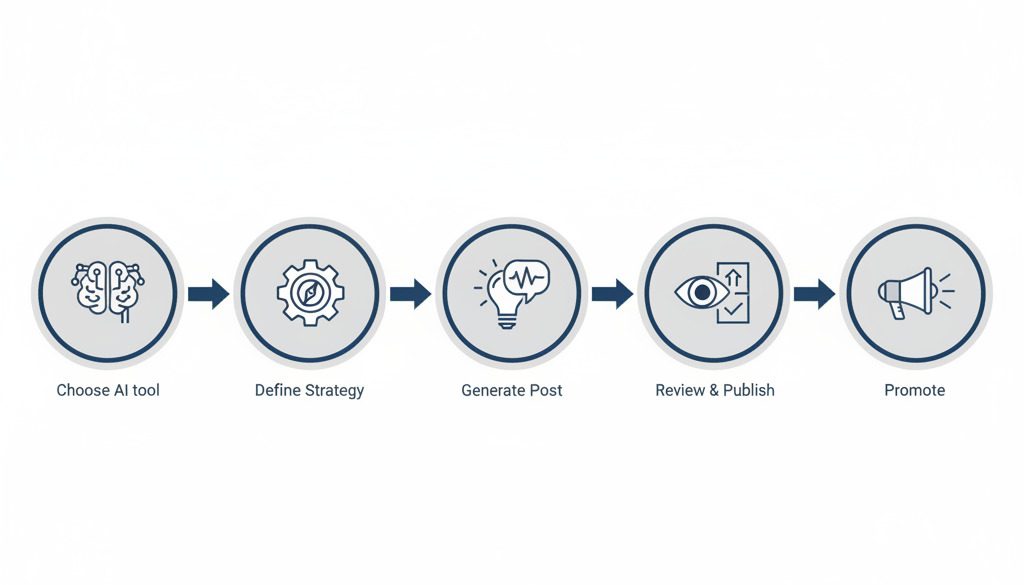
Implementing AI Content for Shopify: A Step-by-Step Approach
Ready to put AI to work for your store? The process is simpler than you might think and is designed to get you from zero to a published, SEO-optimized blog post as quickly as possible.
- Choose the Right AI Tool: Select a platform designed for SEO blog content that is easy to use and fits your budget.
- Define Your Content Goals: Briefly tell the AI about your business, your products, and your target audience. What do you want your blog to achieve?
- Generate Your First Posts: Enter a topic or let the AI suggest one. With a few clicks, the platform will generate a complete article draft.
- Review and Personalize: Read through the generated article. Check it for accuracy, inject your brand's unique voice, and add links to your Shopify products where relevant. This human touch is vital.
- Publish and Promote: Publish the post on your Shopify blog. Share it on your social media channels and with your email list to get initial traction.
With a service like More Customers From Your Blog, this process is remarkably straightforward, designed to get you results quickly. To make it even easier, they offer your first 5 posts free, allowing you to experience the power of AI firsthand without any initial commitment.
Overcoming AI Hesitations and Building Trust
It's natural to be skeptical about letting a machine handle a creative task like writing. Many business owners worry about originality, quality, and the loss of a human touch.
Common Concerns Addressed
- "Is the content unique?" Yes. Reputable AI tools generate content from scratch every time. They don't copy from other websites. The content will pass plagiarism checks.
- "Will it sound robotic?" Early AI writers often sounded stiff. Today’s advanced models are much more sophisticated and can produce text that is fluid, natural, and engaging. The key is providing the right prompts and performing a quick human review.
- "Does it lack a human touch?" AI provides the foundation—a perfectly structured, SEO-optimized, and well-researched draft. The final 10% is up to you. Spending just 15-20 minutes adding your own perspective, stories, or brand-specific examples is what transforms a great article into an exceptional one.
Real-World Success: Case Studies and Testimonials
The proof, as they say, is in the pudding. The adoption of AI for content is not theoretical; it's driving real growth for thousands of businesses. Since its launch, over 500 companies are now finding customers organically on Google thanks to the AI-driven approach of services like More Customers From Your Blog. These are small and medium-sized businesses—just like yours—that have unlocked a new, automated channel for customer acquisition.
Hypothetical Case Study: "Artisan Coffee Roasters" Shopify Store
| Metric | Before AI Blog (Month 1) | After AI Blog (Month 6) | Change |
|---|---|---|---|
| Monthly Organic Visitors | 150 | 1,800 | +1100% |
| Ranking Keywords | 25 | 450+ | +1700% |
| Blog-Attributed Sales | $50/month | $950/month | +1800% |
Integrating AI Content with Your Overall Marketing Strategy
Your AI-generated blog should not exist in a silo. It should be the central hub of your content marketing efforts. Think of each blog post as a major asset that can be repurposed and amplified across all your marketing channels.
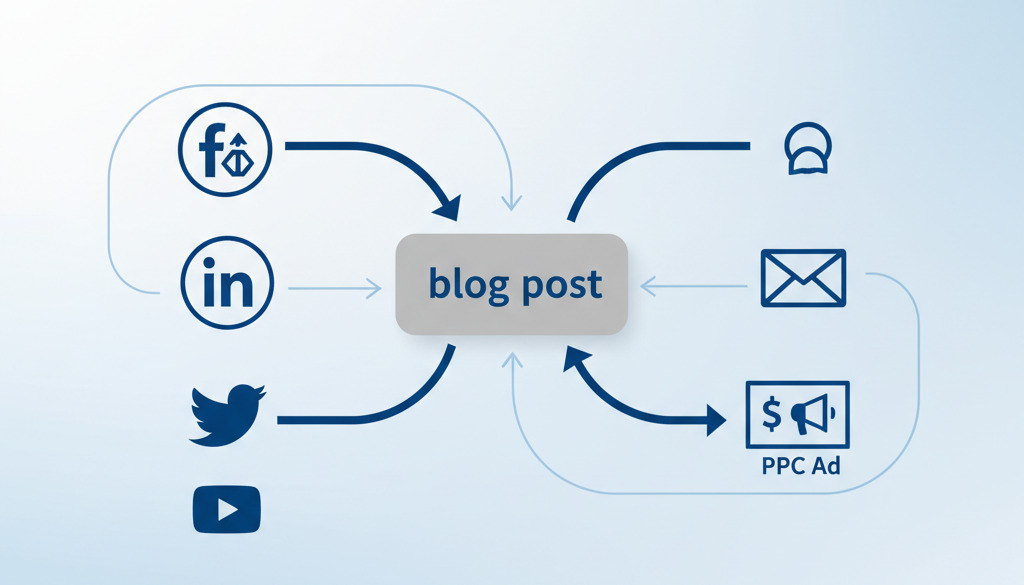
The Hub-and-Spoke Model
- The Hub: Your new, in-depth blog post.
- The Spokes:
- Social Media: Share key insights, quotes, or visuals from the post on Instagram, Facebook, and LinkedIn, always linking back to the full article.
- Email Marketing: Send a newsletter to your subscribers summarizing the blog post and encouraging them to read more. This provides value and keeps your brand top-of-mind.
- Paid Ads: You can run retargeting ads to people who have read a specific blog post, showing them relevant products.
This integrated strategy ensures you get the maximum possible value out of every single piece of content the AI creates.
The Future of Shopify Blog SEO: AI and Beyond
The world of SEO and AI is evolving at a breakneck pace. What we see today is just the beginning. In the near future, AI will become even more integrated into the e-commerce experience. We can expect to see AI driving hyper-personalized content, where blog articles dynamically adjust to a specific visitor's interests. AI will also offer more advanced predictive analytics, telling you what content you should create next for maximum impact.
Google itself is heavily investing in AI for its search results. Embracing AI for your own SEO strategy isn't just about catching up; it's about preparing your business for the future of how customers will discover and interact with brands online.
Getting Started: Your Free Trial with "More Customers From Your Blog"
The journey to dominating search results and driving a flood of organic traffic to your Shopify store starts with your first blog post. The technology that was once reserved for large corporations with massive marketing budgets is now at your fingertips, and it's easier to use than ever.
Ready to see the 'magic' for yourself? More Customers From Your Blog invites you to experience the power of AI-generated SEO blog posts. Claim your first 5 posts absolutely free and start attracting more customers from Google today. There is no risk, only the reward of saving time, scaling your marketing, and watching your Shopify sales grow.
Conclusion
For the driven Shopify entrepreneur, time is the most valuable commodity. The constant pressure to manage inventory, fulfill orders, handle customer service, and grow the business leaves little room for mastering the complex art of SEO content creation. Artificial Intelligence definitively solves this problem. It democratizes SEO, giving every business owner the ability to produce a high-volume, high-quality blog that drives organic traffic, builds unbreakable brand authority, and, ultimately, increases sales.
By embracing AI, you are not cutting corners; you are gaining efficiency. You are trading hours of frustrating, manual work for a streamlined, automated system that produces measurable results. It’s time to stop letting a lack of time hold your store back. The tools are here. The opportunity is now. It's time to let AI power your content and watch your Shopify sales surge.
Frequently Asked Questions
1. Will AI-generated content get penalized by Google?
No. Google has been very clear on this topic. Their official stance is that they reward high-quality content that is helpful to users, regardless of how it is produced. AI-generated content that is original, well-structured, and serves the user's search intent is perfectly acceptable and can rank very well. Low-quality, spammy content will be penalized, whether written by a human or an AI.
2. How much human editing is needed for AI blog posts?
This can vary, but a good practice is to plan for a 15-30 minute review of each post. The AI handles 90% of the work—the research, structure, and initial drafting. Your role is in the final 10%: to fact-check any specific claims, inject your brand's unique voice and personality, add personal anecdotes, and include links to your own products. This "human touch" elevates the content from great to exceptional.
3. Can AI really understand my specific business and products?
Yes. The effectiveness of an AI content tool depends on the information you give it. By providing the AI with a clear description of your business, your target audience, and the product or topic you want to write about, it can generate surprisingly relevant and nuanced content. The more context you provide, the better the output will be.
4. How long does it take to see SEO results from an AI-powered blog?
SEO is a long-term strategy, not an overnight fix. While AI dramatically speeds up content production, it still takes time for Google to crawl, index, and rank your new pages. You can typically expect to see initial positive signals and traffic growth within 3 to 6 months of consistently publishing high-quality blog posts (e.g., 1-2 per week). The results will continue to compound over time.
5. Is using AI for my Shopify blog expensive?
Compared to the alternatives, AI is an incredibly cost-effective solution. Hiring a freelance writer can cost anywhere from $100 to $500+ per article. A marketing agency can cost thousands per month. Many AI content platforms offer subscription plans at a fraction of that cost. Furthermore, services like More Customers From Your Blog often provide a free trial (e.g., 5 free articles) so you can see the value for yourself before committing.
Keep reading
Hand-picked guides that go deeper — open the one you need next:
- Shopify Store Owners: Drive Sales with AI-Powered Blog Content
- Shopify Blog SEO: AI Articles for More Traffic & Sales
- Unlock Sales: Product-Focused Blog Content with AI for E-commerce
- Ecommerce SEO: Why AI is Your Secret Weapon for Online Stores
→ Read the full Shopify & Ecommerce guide
→ Read the full Shopify & Ecommerce guide