
Ecommerce SEO: Why AI is Your Secret Weapon for Online Stores

Key Takeaways
- AI is Reshaping Search: AI Overviews now appear in nearly half of all search queries. Ignoring AI means losing visibility and sales.
- Focus Beyond Rankings: Success is no longer just about ranking #1. It's about being the source for AI-generated answers and optimizing for the entire customer journey, which leads to higher-value conversions.
- Content is King, Depth is its Crown: AI-driven search prioritizes deep, comprehensive, and helpful content. AI tools can help you create this content at scale.
- Efficiency and Insight: AI automates time-consuming tasks like keyword research, technical audits, and content generation, providing deeper insights than manual methods ever could.
- Personalization Drives Growth: AI allows you to personalize the shopping experience for every user, which boosts engagement, increases average order value, and sends positive signals to search engines.
The Shifting Landscape of Ecommerce Search
The digital marketplace for online stores has never been more crowded. Every day, countless new ecommerce businesses launch, all competing for the same limited resource: customer attention. For years, the established playbook for getting noticed involved Search Engine Optimization (SEO), a set of practices designed to help your store rank higher on Google. However, the ground is shifting beneath our feet. Traditional SEO methods, while still foundational, are becoming less effective on their own.
Recent data highlights a dramatic transformation in how search engines work.[1] According to industry reports from early 2026, AI-generated answers (AI Overviews) now appear in approximately 48% of all search queries. This represents a structural change in how customers discover products. They are no longer just seeing a list of ten blue links; they are getting direct, summarized answers. As a business owner, this means your strategy must evolve. Simply ranking for a keyword is not enough if an AI summary is satisfying the user's query without them ever needing to click on your website. A new, more intelligent approach is essential to not just survive but thrive.
Understanding the Core of Ecommerce SEO
Before we dive into how AI is the solution, it’s crucial to understand the goal. At its heart, ecommerce SEO is the practice of optimizing your online store to attract more qualified traffic from search engines like Google—traffic that is likely to convert into paying customers.
The primary goal isn't just more visitors; it's more sales. This is achieved through several key pillars:
- Keyword Research: Identifying the specific words and phrases potential customers use when searching for products you sell.
- On-Page Optimization: Ensuring your product pages, category pages, and blog posts are structured and written in a way that is clear to both search engines and users. This includes titles, descriptions, and the content itself.
- Technical SEO: The "under-the-hood" elements of your website. This covers site speed, mobile-friendliness, and ensuring search engines can easily crawl and index your store.
- Link Building: Earning "votes of confidence" from other reputable websites in the form of links pointing back to your store, which builds your site's authority.
These pillars remain the foundation of a strong online presence. AI doesn't replace them; it supercharges them, allowing you to execute these tasks more effectively and intelligently than ever before.
Introducing AI: Your New Ecommerce SEO Partner
When business owners hear the term *Artificial Intelligence (AI)*, it can often sound complex or futuristic. From a practical standpoint, think of AI as an incredibly powerful assistant. It's a system designed to process and analyze vast amounts of data—far more than any human could—to identify patterns, make predictions, and automate tasks.
For your ecommerce business, AI sifts through customer behavior, competitor strategies, and the entire web to provide actionable insights. It’s not about robots taking over; it’s about using smart technology to make better, data-driven decisions. Consider AI not as a replacement for your business strategy, but as a force multiplier. It takes your knowledge of your products and customers and amplifies your ability to reach them, turning overwhelming data into a clear path toward growth.
AI-Powered Keyword Research for Ecommerce: Unearthing Untapped Demand
Manual keyword research is a cornerstone of traditional SEO, but it has significant limitations. It's incredibly time-consuming and often influenced by the researcher's own biases and assumptions. You might find the obvious keywords, but what about the hidden gems?
The AI Advantage in Finding What Customers Really Want
AI tools revolutionize this process. They can analyze millions of search queries, forum discussions, social media trends, and competitor websites in minutes. This allows them to uncover high-converting keywords that you would likely never find on your own. More importantly, AI excels at understanding user intent—the "why" behind a search.
Discovering High-Value Long-Tail Keywords
One of AI's greatest strengths is its ability to identify long-tail keywords. These are longer, more specific search phrases (e.g., "men's waterproof leather boots for winter hiking" instead of just "men's boots"). While these terms have lower search volume individually, they have a much higher conversion rate because the user knows exactly what they want. AI can pinpoint hundreds or even thousands of these niche phrases, allowing you to target customers who are ready to buy.
Optimizing Product Pages with AI: From Descriptions to Conversions
Your product page is your digital salesperson. If it’s not persuasive, clear, and easy to find, you lose the sale. AI provides a powerful toolkit to ensure every product page is working as hard as you do.
Generating Compelling and Unique Product Descriptions
Writing unique descriptions for hundreds of products is a daunting task, often leading to generic or duplicate content that hurts SEO. AI can generate compelling, SEO-friendly product descriptions in seconds. These aren't just keyword-stuffed blocks of text; modern AI can:
- Adopt your brand’s tone of voice.
- Highlight key features as customer benefits.
- Answer potential customer questions within the description itself.
- Ensure every single description is 100% unique, avoiding penalties from Google.
Perfecting On-Page Elements for Maximum Visibility
Beyond the description, AI can analyze top-ranking competitor pages to suggest improvements for your own. This includes recommendations for product titles, URL structures, and even how to tag your product images. By suggesting descriptive alt text for your images (e.g., "Close-up of brown leather hiking boot on a rocky trail"), AI helps your products appear in Google Image Search, opening up another valuable stream of traffic.
Generative AI for Content Creation: Fueling Your Ecommerce Blog
A blog is one of the most powerful tools for an ecommerce business. It allows you to attract customers who aren't yet ready to buy a product but are searching for information related to your industry. This is where you build trust and authority. However, consistently creating high-quality content is a major challenge for busy business owners.
Generative AI changes the game. It can help you brainstorm topics, create detailed outlines, and write entire articles that address customer pain points and answer their questions. This strategy, known as Answer Engine Optimization (AEO), is about becoming the trusted source for answers in your niche, making you more likely to be featured in AI Overviews.
For many business owners who lack the time or inclination to write, this is a revolutionary step. Services like More Customers From Your Blog have harnessed this technology, offering a solution where their specialized AI writes professional SEO blog posts in minutes. It’s designed to help customers find you on Google through valuable content, removing the heavy lifting of content creation from your plate.
AI-Driven Technical SEO Audits: Ensuring a Seamless User Experience
Technical SEO is the foundation upon which your entire digital store is built. If the foundation is cracked, everything else suffers. Issues like slow page load speeds, broken links, or a site that isn’t mobile-friendly can cause potential customers to leave in frustration and will lead Google to rank your site lower.
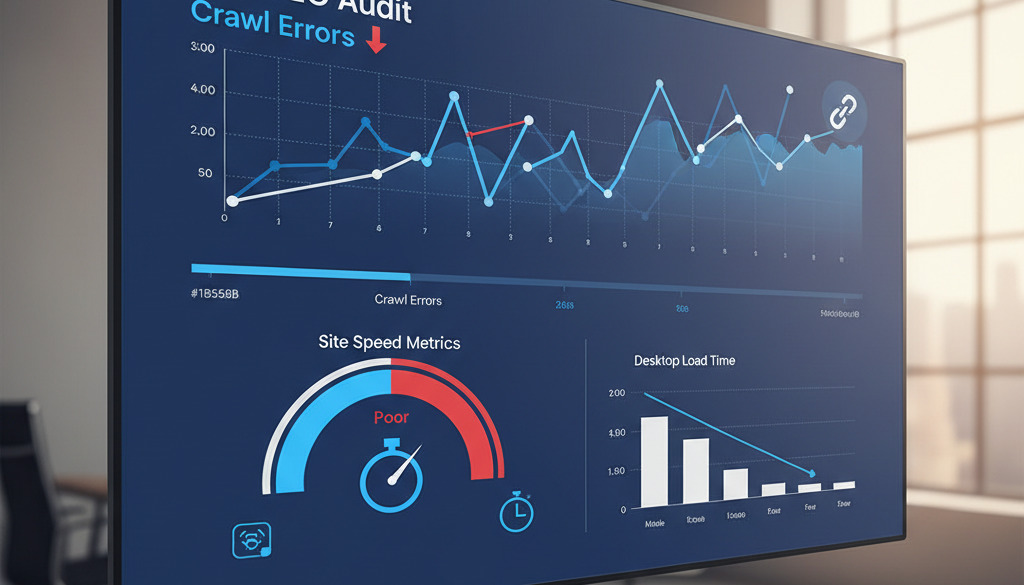
Manually auditing a site for these issues is tedious and requires deep technical expertise. AI-powered tools automate this entire process. They can crawl your entire website, just as Google does, and identify thousands of potential issues in a fraction of the time it would take a human. These tools don’t just flag problems; they often provide prioritized lists of fixes, explaining why each issue is important and how to resolve it. By ensuring a technically sound website, you improve user experience, reduce bounce rates, and provide the positive signals that search engines reward.
Smart Link Building Strategies with AI Assistance
Link building—the process of getting other websites to link to yours—is a powerful signal of authority to Google. However, it can feel like a slow, manual grind of outreach and networking. AI can inject much-needed intelligence and efficiency into this process.
Identifying High-Quality Opportunities
Instead of manually searching for potential websites to partner with, AI tools can analyze the backlink profiles of your top competitors. They can instantly show you which high-authority sites are linking to them but not to you, providing a ready-made list of high-value targets. Furthermore, AI can assess the relevance and quality of a potential linking site, ensuring you’re focusing your efforts on opportunities that will actually move the needle.
Streamlining Outreach and Content Promotion
AI can also help identify "linkable asset" opportunities. For example, it can find broken links on authoritative blogs in your niche that you could suggest replacing with a link to your own relevant content. Some advanced tools can even assist in personalizing outreach emails at scale, increasing your chances of getting a positive response. This transforms link building from a guessing game into a data-driven strategy.
Personalization at Scale: AI's Role in Enhancing User Journeys
Imagine a physical store where the salesperson knows each customer
Keep reading
Hand-picked guides that go deeper — open the one you need next:
- Shopify Blog SEO: Growth Strategies for Small Business
- Shopify Blog SEO Secrets: How AI Generates Buyer-Intent Content for More Sales
- Mastering Shopify Buyer Intent Content for Higher Sales
- Shopify AI Blog Content: A Strategic Guide for Merchants
→ Read the full Shopify & Ecommerce guide
→ Read the full Shopify & Ecommerce guide