
Increase Shopify Sales with AI-Driven Buyer Intent Blog Posts
Key Takeaways
- Understanding Buyer Intent: Buyer intent is the underlying motivation behind a customer's search or action. AI helps decode these signals (e.g., search queries, pages visited) to predict what customers want to buy and when.
- AI for Shopify: For Shopify merchants, AI is no longer a futuristic concept but a practical tool. It automates the process of understanding customer behavior, enabling hyper-personalized marketing and product recommendations.
- The Power of Blog Content: A strategic, SEO-optimized blog is your most powerful tool for capturing high-intent customers. By creating content that answers specific questions and solves problems, you attract qualified traffic directly from search engines.
- AI-Driven Content Creation: Modern AI tools can analyze buyer intent signals and then generate high-quality, relevant blog posts in minutes, solving the "no time for content" problem for busy business owners.
- Measurable Growth: Implementing an AI-driven content strategy leads to tangible results, including higher conversion rates, increased average order value (AOV), and a lower customer acquisition cost (CAC).
The Shifting Landscape of Online Commerce and the Rise of Intent
The world of e-commerce has evolved far beyond a simple online catalog. In the early days, having a website was enough. Today, your customer is more sophisticated, more informed, and more demanding than ever before. They don't just show up to buy; they show up to research, compare, and validate their choices. This fundamental shift has made understanding buyer intent the single most important factor for success in online retail.
So, what is buyer intent? In simple terms, it's the digital body language of your potential customers. It's the purpose or goal behind their online actions. Are they just browsing with a vague interest (informational intent), comparing different options (investigational intent), or ready to pull out their credit card (transactional intent)?
Traditional marketing often relied on broad demographic data—like age, gender, and location. While that information has its place, it doesn't tell you the most important thing: what does this person want to achieve right now? A 60-year-old man and a 25-year-old woman could both be searching for "high-quality ergonomic office chair." Their demographics are different, but their intent is identical. Targeting their intent, not their profile, is the key to winning their business. Ignoring it means getting lost in the noise, as modern consumers expect experiences and content tailored to their immediate needs.
What Exactly is "Buyer Intent AI" and How Does it Work?
This is where Artificial Intelligence (AI) transforms from a buzzword into a powerful business asset. Buyer Intent AI refers to sophisticated systems designed to analyze massive volumes of data to predict a user's purchasing goals. It moves beyond simple analytics to uncover the "why" behind the "what."
How AI Deciphers Intent
At its core, buyer intent AI is a pattern-recognition engine. It sifts through countless digital signals that humans would miss, connecting the dots to form a clear picture of a user's journey. Here’s a simplified look at the data sources it uses:
- Search Engine Queries: The topics, questions, and keywords a person uses on Google or Bing are powerful indicators. Someone searching for "men's running shoes" has different intent than someone searching for "best price on Nike Air Zoom Pegasus."
- Website Interactions: Once on your site, every click is a clue. Did they visit a specific product page multiple times? Did they use your site's search bar for a particular feature? Did they spend a long time on the pricing or shipping policy page?
- Content Consumption: The articles they read, the videos they watch, and the guides they download all reveal their stage in the buyer's journey. Reading a blog post titled "How to Choose Your First DSLR Camera" signals a different intent than reading "Canon EOS R5 vs. Sony A7 IV Comparison."
- Social Media Signals: Engagement with brands, posts they like, and questions they ask in forums or groups also contribute to their intent profile.
By processing these signals together, the AI builds a predictive model. It can then categorize visitors into segments, such as "high-intent," "research phase," or "brand-aware," allowing you to engage with them in a much more relevant and effective way.
Why Shopify Merchants Need to Pay Attention to Buyer Intent
As a business owner, your most valuable resources are time and money. Every marketing dollar you spend and every hour you work needs to deliver a return. This is precisely why harnessing buyer intent is no longer an optional luxury—it's a competitive necessity for Shopify merchants.
Focusing on buyer intent directly addresses the primary pain points of many established entrepreneurs who are experts in their field but not necessarily in digital marketing:
- Limited Marketing Budgets: Instead of casting a wide, expensive net hoping to catch a few customers, buyer intent data allows you to focus your ad spend laser-specifically on people who are already indicating they're ready to buy. This dramatically lowers your Customer Acquisition Cost (CAC).
- Efficient Customer Acquisition: Why waste effort on tire-kickers? By identifying high-intent signals, you can prioritize engaging with visitors who are most likely to convert, making your sales efforts far more productive.
- Turning Browsers into Buyers: Your Shopify store gets plenty of visitors, but how many leave without making a purchase? Understanding their intent allows you to proactively address their questions, offer the right information, or present a timely incentive to overcome hesitation and convert them into paying customers.
In today's crowded market, the businesses that will thrive are not just the ones with the best products, but the ones who understand their customers most deeply. Buyer intent is the language of the modern consumer; AI is the translator.
By integrating an intent-focused strategy, you shift from a reactive to a proactive sales model. You stop waiting for customers to hopefully find what they need and start guiding them directly to the solutions they are actively looking for. This creates a superior customer experience and a significant competitive advantage.
Identifying High-Intent Signals on Your Shopify Store
Your Shopify store is a goldmine of behavioral data. Every visitor leaves a trail of digital breadcrumbs that reveal their intentions. Learning to recognize these signals is the first step toward leveraging buyer intent AI. While AI tools automate this on a large scale, understanding the underlying behaviors is crucial.
Key On-Site Behaviors Indicating High Purchase Intent:
Think of these actions as digital equivalents of a customer walking into a physical store and asking to see the most expensive item.
- Multiple Views of a Specific Product Page: A single visit might be curiosity. Two, three, or more visits to the same product page within a short period signals deep interest and consideration.
- Use of the "Add to Cart" Button: This is one of the strongest signals. Even if the cart is later abandoned, the initial action shows a clear desire to purchase. Abandoned carts are not failures; they are high-intent leads that need re-engagement.
- Time Spent on Critical Pages: Significant time spent on pages like your pricing table, feature comparison charts, shipping information, or return policy suggests a user is in the final stages of decision-making. They are past the initial research and are now evaluating the practicalities of a purchase.
- Internal Site Search Specificity: The queries typed into your store’s search bar are direct lines into your customer’s mind. A search for "shoes" is low intent. A search for a specific model number like "Men's Classic Leather Tabi size 11" is extremely high intent.
- Initiating Live Chat or Viewing Contact Page: When a user actively seeks out help or looks for your business information, they often have a specific, pre-purchase question that is a final barrier to conversion.
By themselves, any one of these signals is informative. When combined and analyzed by an AI system, they create a powerful predictive score that can trigger automated workflows, such as personalized emails, special offers, or targeted ads, all designed to guide that high-intent user across the finish line.
Beyond On-Site: Leveraging Off-Site Buyer Intent Data
The customer journey rarely begins on your product page. It starts much earlier, often with a question or problem typed into a search engine.[1] Understanding what happens before a user clicks to your Shopify store is a powerful strategy for attracting the most qualified traffic.
Off-site buyer intent is about capturing demand, not just fulfilling it. It involves meeting customers where they are in their research process. This is where a content-first approach becomes invaluable.
Tuning into Pre-Visit Intent Signals
Consider the difference in intent behind these Google searches:
- Low Intent (Informational): "how do espresso machines work"
- Medium Intent (Investigational): "best espresso machines under $500"
- High Intent (Transactional): "buy Breville Barista Express free shipping"
Your goal is to create content that intercepts users at each of these stages, but with a special focus on the investigational and transactional queries. By creating a blog post, a guide, or a comparison page that ranks for "best espresso machines under $500," you attract a user who has already decided they want a product in your category and is actively comparing options. You capture their interest before your competitors even know they exist.
This pre-visit intent data is crucial. It tells you what topics your audience cares about, what problems they need to solve, and what language they use to describe their needs. Capturing this traffic with valuable content allows you to build trust and authority, making your Shopify store the logical next click when they are finally ready to make a purchase.
The Power of Personalization Driven by Buyer Intent AI
One of the most significant advantages of using buyer intent AI is the ability to move beyond generic, one-size-fits-all marketing. You can now deliver hyper-personalized experiences that make each customer feel like your store was designed just for them. This level of personalization was once the exclusive domain of giants like Amazon, but AI has democratized it for Shopify merchants of all sizes.
How AI Enables True Personalization
By analyzing intent signals in real-time, AI can dynamically alter a customer's experience on your site and across your marketing channels.
- Dynamic Website Content: Imagine a visitor lands on your homepage. Instead of seeing a generic banner, they see one showcasing the product category they just viewed on a previous visit. The "Featured Products" section could automatically populate with items similar to the one they added to their cart. This is AI at work, tailoring the storefront to individual intent.
- Targeted Email Marketing: Forget "email blasts." With intent data, you can create highly segmented campaigns. A user who abandoned a cart gets a different email than a user who read three blog posts about a specific topic. You can send follow-up emails with content that helps them overcome their specific hesitation, such as a guide to using the product or customer testimonials.
- Personalized Advertising: Retargeting ads become exponentially more powerful. Instead of just showing an ad for the exact product they viewed, AI can show them ads for complementary products, or an ad featuring a limited-time discount to nudge them towards a decision.
This tailored approach has a profound impact. According to research, personalization can lift revenues by 5-15% and increase marketing spend efficiency by 10-30%. It fosters a stronger customer connection, increases engagement, and dramatically boosts conversion rates by showing customers you understand their needs.
Enhancing Product Discovery and Recommendations with AI
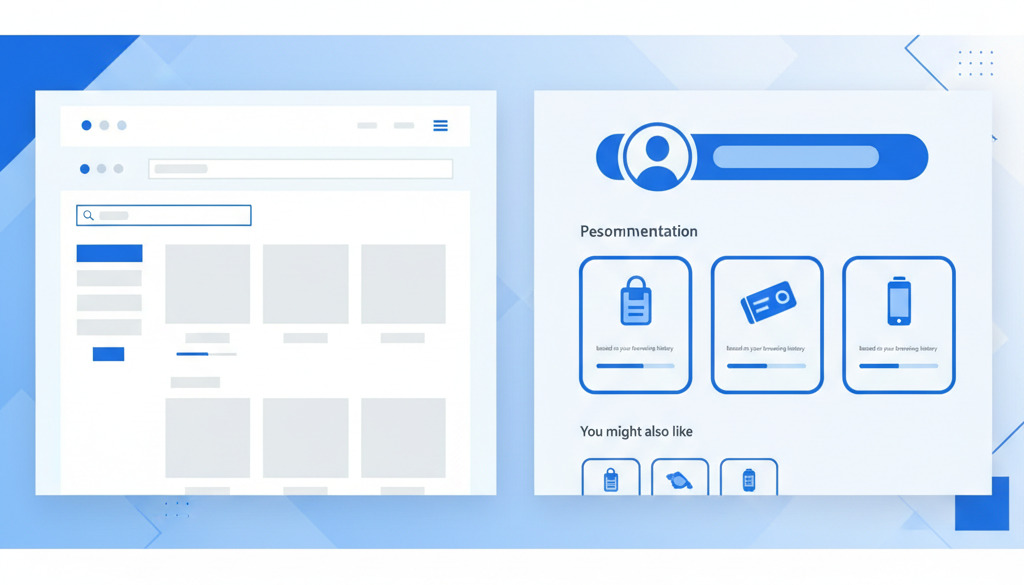
A common challenge in e-commerce is helping customers find what they want, especially in stores with large inventories. If a customer can't find a product, they can't buy it. Traditional product recommendations are often simplistic, relying on basic rules like "customers who bought this also bought that." Buyer intent AI takes this to a whole new level of sophistication.
Moving Beyond Basic Cross-Sells
AI-powered recommendation engines analyze a user's real-time behavior and inferred intent to make truly intelligent suggestions. Here’s how it’s different:
- Intent-Based Suggestions: Instead of just showing popular items, the AI can infer what a customer is trying to accomplish. For example, if a customer is browsing camping tents, a basic system might recommend another tent. An AI system would understand they are planning a camping trip and recommend related items like sleeping bags, portable stoves, and headlamps, effectively building their entire shopping list for them.
- Personalized Discovery: AI can help customers discover products they might love but wouldn't have thought to search for. By analyzing the attributes of products a user interacts with (e.g., color, material, style, brand), the AI can surface other items in your catalog that share those attributes, creating a "serendipitous" discovery experience that feels incredibly personal.
- Filling the Gaps: AI can identify patterns in browsing that suggest a missing piece. If a customer buys a camera, the AI knows a memory card and a camera bag are essential accessories and can recommend them at checkout, increasing the Average Order Value (AOV).
By making your product discovery process smarter and more intuitive, you reduce friction in the shopping experience. You help customers find what they need faster, increase the size of their orders, and create a more satisfying journey that encourages them to return.
Optimizing Your Shopify Marketing Campaigns with Intent Data
Buyer intent data is a powerful strategic asset that should be integrated across all of your marketing channels. Using this data allows you to optimize your spend, improve your targeting, and craft messaging that resonates deeply with your audience's current needs. It’s about delivering the right message, on the right channel, at the right time.
Applying Intent Data Across Your Marketing Mix
Let's break down how this works for key marketing channels:
Search Engine Marketing (SEM)
Instead of bidding broadly on top-of-funnel keywords, you can use intent data to focus your budget on search terms that signal a strong desire to purchase. Analyze the on-site search queries from your most valuable customers and use those long-tail keywords in your Google Ads campaigns. For example, instead of bidding on "sofas," you bid on "3-seat gray velvet chesterfield sofa," attracting traffic that is much more likely to convert.
Social Media Advertising
Platforms like Facebook and Instagram have powerful targeting capabilities. You can create custom audiences based on intent signals from your Shopify store. For example, you can create a retargeting campaign specifically for users who added an item to their cart in the last 7 days but didn't purchase. You can also build lookalike audiences based on your list of high-intent users, telling the platform to find more people with similar online behaviors.
Email Marketing
This is where intent-based segmentation truly shines. You can create automated email flows triggered by specific behaviors:
- Abandoned Cart Flow: The classic, and for good reason. Send a series of emails reminding the customer, perhaps offering a small discount or highlighting customer reviews to build confidence.
- Browse Abandonment Flow: For users who viewed a product multiple times but didn't add it to their cart. Send an email with more information about that product, a link to a relevant blog post, or suggestions for similar items.
- New Customer Welcome Series: For users who just made their first purchase. Send a series of emails that help them get the most out of their product, introduce them to your brand story, and suggest complementary products.
By closing the loop between the data gathered on your site and the actions you take in your marketing, you create a cohesive and highly effective system for nurturing leads and driving sales.
The Role of Content in Capturing and Nurturing Buyer Intent
While ads and emails are great for engaging users already in your ecosystem, how do you attract high-intent customers in the first place? The answer is content marketing. A high-quality, SEO-optimized blog is the single most effective tool for capturing organic traffic from potential buyers who are actively researching solutions your products provide.
Every search query is a question. Your blog's job is to provide the best answer. When you do, Google rewards you with visibility, and customers reward you with their trust.
Your future customers are on Google right now, asking questions that your products can answer. If you don't have content that shows up, for all intents and purposes, your business doesn't exist to them.
However, for a busy business owner, consistently creating this type of strategic content is a major challenge. It requires research, writing skill, and a significant time investment. This is where specialized services become invaluable, particularly those built around the promise of getting you "more customers from your blog." Many entrepreneurs are turning to AI-powered content solutions that handle the heavy lifting of SEO and article writing, allowing them to focus on their core business while still reaping the benefits of a powerful content strategy.
Matching Content to Intent Stages
A successful content strategy addresses all stages of the buyer's journey:
- Top of Funnel (Awareness): Blog posts that answer broad questions. (e.g., "What are the Benefits of a standing desk?")
- Middle of Funnel (Consideration): Comparison guides, detailed reviews, and case studies. (e.g., "Electric vs. Manual Standing Desks: A Complete Comparison")
- Bottom of Funnel (Decision): Content that helps close the deal, like detailed FAQ pages for a product or articles about your shipping and warranty policies.
By creating a library of content that covers these stages, you build a powerful flywheel that continuously attracts, nurtures, and converts customers from search engines.
AI-Powered Content Creation: A Game Changer for Shopify Merchants
Understanding the need for high-quality, intent-driven content is one thing. Finding the time and resources to produce it consistently is another. For most SMB owners, this is the primary bottleneck. The good news is that AI is not just for analyzing intent—it can also be used to create the very content needed to capture it.
This is where the magic really happens for time-strapped entrepreneurs. Modern AI content generation is far beyond the robotic, nonsensical text of a few years ago. Sophisticated AI writing platforms are now specifically designed for creating SEO-friendly blog content.
How AI Streamlines Content Production
The process is remarkably efficient. You can leverage the insights from your buyer intent analysis to inform the AI. For instance, if you notice many customers search your site for "how to clean suede boots," you can instruct the AI to write a comprehensive guide on that exact topic. The result is content that directly answers what your potential customers are asking for. It’s a perfect synergy.
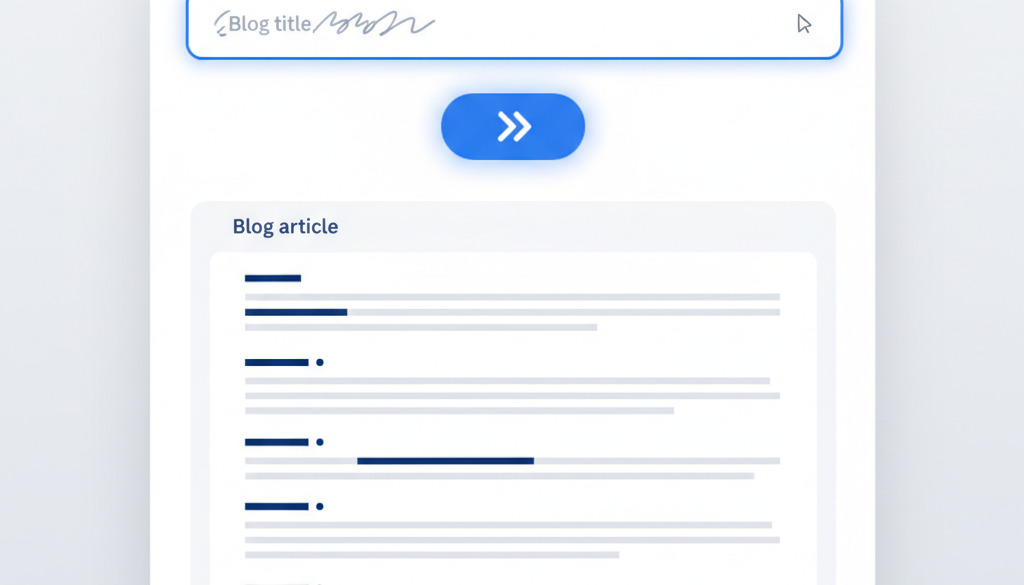
Leading services in this space often have their own fine-tuned AI models. As one provider puts it, their proprietary AI can "write professional SEO blog articles for your website in minutes—almost like magic." This isn’t an exaggeration of the user experience. You provide a topic or keyword, and the platform generates a structured, well-written, and optimized article that is ready to be published on your Shopify blog. This speed and ease of use are transformative, helping your customers find you on Google through content that you can create with minimal effort.
Overcoming Common Challenges in Implementing Buyer Intent AI for Shopify
Adopting any new technology can feel daunting, and AI is no exception. Many business owners are intrigued by the potential but hesitant due to perceived complexities or costs. It's important to address these common concerns and provide a realistic path forward.
Data Privacy Concerns
Using customer data comes with a responsibility to protect it. The key is to work with reputable AI partners and apps that are transparent about their data handling policies and comply with regulations like GDPR and CCPA. Most buyer intent AI focuses on anonymized behavioral data (clicks, page views) rather than sensitive personal information.
Integration Complexities
The thought of a complicated technical integration is a major deterrent for non-technical business owners. Thankfully, the Shopify ecosystem is built on user-friendly apps. Many leading AI tools and content services offer seamless, one-click integrations with your Shopify store, pulling in product and customer data automatically with no coding required.
The Perceived Cost of AI
AI tools can range from free to thousands of dollars per month. The key is to start small and focus on the return on investment (ROI). Many platforms are priced specifically for small and medium-sized businesses. Instead of viewing it as a cost, frame it as an investment. If an AI tool costs $100 a month but generates $1000 in additional sales, the value is clear. Always start with a tool that offers a free trial or a low-cost entry plan to prove its value before committing.
Choosing the Right Partner
The market is flooded with AI apps. How do you choose? Look for solutions that are built for your specific need (e.g., content creation, product recommendations). Read reviews, look at case studies from businesses similar to yours, and prioritize platforms with strong customer support. The best partner is one who understands the needs of a Shopify merchant, not just an enterprise client.
Measuring the ROI of Buyer Intent AI on Your Shopify Store
One of the most compelling aspects of implementing an AI strategy is that its impact is highly measurable. You can move beyond vague notions of "brand awareness" and track concrete improvements in the key performance indicators (KPIs) that matter most to your bottom line. It's essential to establish a baseline before you begin and then track these metrics over time.
Key Metrics to Track
Here are the core KPIs you should monitor to gauge the success of your AI-driven buyer intent initiatives. By tracking these, you can clearly demonstrate the financial return on your investment.
| KPI | Traditional Benchmark (Before AI) | Potential Uplift with AI (After AI) | Why it Matters |
|---|---|---|---|
| Conversion Rate | Typically 1-2% for ecommerce | Increase of 15-30% | Measures how effectively you turn visitors into buyers. AI improves this through personalization. |
| Customer Acquisition Cost (CAC) | Varies by industry | Decrease of 10-20% | The cost to acquire a new customer. AI lowers this by targeting high-intent users, reducing wasted ad spend. |
| Average Order Value (AOV) | Your current average | Increase of 5-25% | The average amount spent per order. AI boosts this with intelligent up-sells and cross-sells. |
| Customer Lifetime Value (CLTV) | Your current average | Increase of 10-25% | The total revenue a customer generates over their lifetime. AI-driven personalization fosters loyalty and repeat purchases. |
| Cart Abandonment Rate | ~70% industry average | Decrease of 10-20% | The percentage of users who add to cart but don't buy. AI-powered re-engagement and timely offers can recover a significant portion of this lost revenue. |
To attribute this growth correctly, use the analytics dashboards within your AI tools and Shopify. Compare the performance of AI-driven campaigns against your control groups. For example, track the conversion rate of visitors who interacted with an AI recommendation versus those who didn't.
Keep reading
Hand-picked guides that go deeper — open the one you need next:
- Shopify Buyer Intent Content: A Master Strategy Guide
- Shopify Blog SEO: Growth Strategies for Small Business
- E-commerce Blog Automation: The Smart Way to Grow Your Store
- Shopify Blog SEO Secrets: How AI Generates Buyer-Intent Content for More Sales
→ Read the full Shopify & Ecommerce guide
→ Read the full Shopify & Ecommerce guide