
Shopify Buyer Intent Content: A Master Strategy Guide
Key Takeaways
- Buyer intent is the most critical metric for determining how likely a visitor is to purchase from your Shopify store.
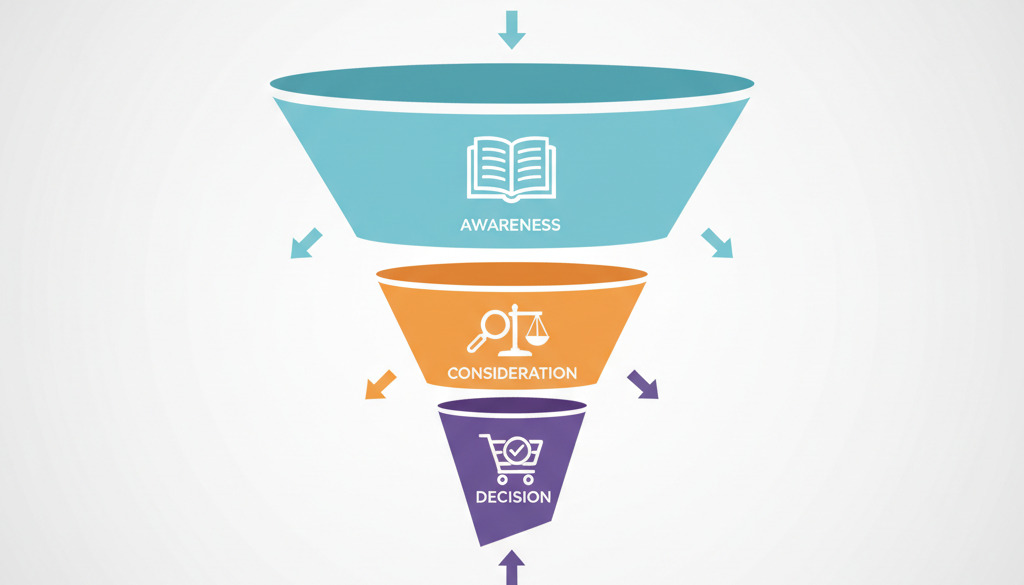
- Content should be categorized into three stages: Awareness (Informational), Consideration (Commercial), and Decision (Transactional).
- High-intent keywords often include modifiers like "best," "review," "vs.," or "discount."
- Successful Shopify stores map their keyword research directly to specific stages of the sales funnel to reduce friction.
- Leveraging social proof and technical comparisons helps bridge the gap between browsing and buying.
In the hyper-competitive world of e-commerce, traffic is a vanity metric; conversion is the reality. For Shopify merchants, the difference between a high-bounce store and a thriving brand often lies in buyer intent.[2] Buyer intent refers to the signals and psychological cues that indicate how close a prospect is to making a purchase. While general interest might bring someone to a blog post about "summer fashion trends," buyer intent brings them to a page searching for "best breathable linen dresses under $100."
Understanding and capturing this intent is paramount because it allows you to stop shouting at everyone and start whispering to the right people. When you align your content strategy with what a user is actually trying to achieve, your conversion rates naturally climb. This article serves as a comprehensive guide to navigating the Shopify buyer intent spectrum, ensuring that every piece of content you produce serves a strategic purpose in moving a customer from curiosity to checkout.
Understanding the Buyer Intent Spectrum: From Awareness to Decision
The journey a customer takes on your Shopify store is rarely linear, but it always follows a psychological progression. To capture sales effectively, you must categorize your content based on the user's current mindset.
The Awareness Stage: Identifying Unmet Needs and Early Signals
At the Awareness stage, the customer feels a "pain" but hasn't yet put a name to the solution. They are looking for information, education, and relief. For a Shopify store selling eco-friendly kitchenware, a user in this stage isn't searching for your brand name; they are searching for "how to reduce plastic waste at home." Content here should be broad, helpful, and empathetic. Your goal is to be the first helpful voice they hear, establishing top-of-mind awareness before they even know they need your specific product.
The Consideration Stage: Exploring Solutions and Product Categories
Now, the customer knows the solution. They’ve decided they need a reusable coffee cup, but they don't know which type. They are weighing options. They might search for "glass vs. stainless steel travel mugs" or "best insulated cups for commuting." This is the Consideration stage, where your content must act as a neutral-yet-authoritative guide. You aren't just selling; you are helping them "shop."
The Decision Stage: Evaluating Specific Products and Brands
This is the "bottom of the funnel." The customer has their credit card nearby. They are looking for reasons to trust your brand over a competitor or looking for a final incentive. Searches include "[Brand Name] reviews," "Brand X vs. Brand Y," or "discount code for [Product]." Content here must be ultra-specific, high-conversion, and heavy on social proof. If your content doesn't answer "Why buy this now?", you lose the sale to someone who does.
Strategic Content Pillars for Shopify Buyer Intent
To turn these psychological stages into a working strategy, you need to build content pillars that support the unique needs of each phase.
Problem/Solution Focused Content (Awareness)
Your Awareness pillar should focus on the "Why." Why does the customer need to make a change? For a Shopify fashion brand, a blog title might be "5 Reasons Your Work Wardrobe Feels Outdated." For a tech niche, it could be "Why Your Home Wi-Fi Is Slowing Down Your Productivity." By answering these questions on your blog or social media, you capture organic traffic from people who have the problem your product eventually solves.
Educational and Comparative Content (Consideration)
The Consideration pillar is built on authority. You want to offer round-up posts or "Buying Guides." For instance, a Shopify store in the home goods niche should create a "Ultimate Guide to Choosing the Right Thread Count for Bed Sheets." This content helps the user categorize their needs, and by providing the criteria for a "good" purchase, you can subtly highlight the features your products excel in.
Product-Centric and Trust-Building Content (Decision)
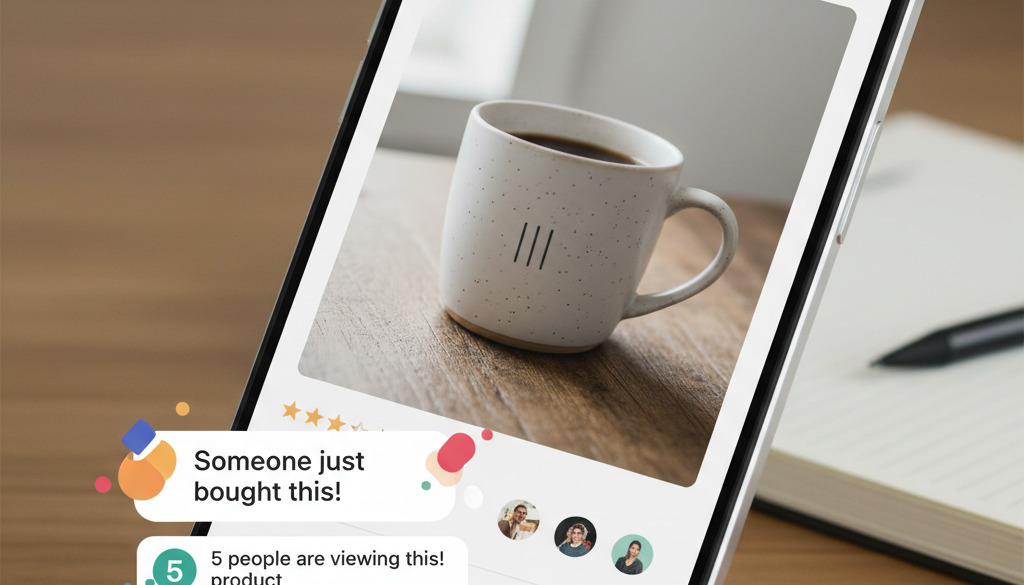
Your Decision pillar focuses on the "What" and "How." This includes high-fidelity product descriptions, video demonstrations showing the product in use, and deep-dive case studies of happy customers. For a makeup brand, this might look like a "Before and After" gallery or a detailed breakdown of ingredients that justify a premium price point. Urgency and scarcity—such as "Limited Edition" or "Only 5 Left"—are most effective here.
Keyword Research & Intent Mapping: The Foundation of Effective Content
Search engines are the primary way users express intent. If you don't map your keywords to the stages mentioned above, you will end up with traffic that doesn't buy.
Identifying Intent Modifiers
Intent modifiers are the words that change the meaning of a search. "Tennis shoes" is a broad keyword with mixed intent. "How to clean tennis shoes" is informational (Awareness). "Best tennis shoes for flat feet" is commercial (Consideration). "Buy Nike Pegasus size 10" is transactional (Decision). Using tools like Ahrefs, SEMrush, or even the Shopify Search Discovery tool helps you find these high-converting long-tail phrases.
Mapping Keywords to Buyer Stages: A Step-by-Step Example
Let's look at a hypothetical Shopify store selling organic skincare.
- Awareness: "Why is my skin dry in winter?" Target this with a blog post explaining skin barriers.
- Consideration: "Face oil vs. moisturizer for dry skin." Target this with a comparison guide.
- Decision: "Organic Rosehip Oil reviews" or "Cheap organic skincare sets." Target this with a product page or a bundle landing page.
Long-Tail Keywords for Specific Intent
Long-tail keywords (phrases with 4+ words) usually have lower search volume but much higher conversion rates. A user searching for "laptop" is browsing. A user searching for "waterproof 13-inch laptop sleeve with pockets" knows exactly what they want. Shopify stores thrive on these niches. By creating content that targets these hyper-specific queries, you often face less competition and higher Return on Ad Spend (ROAS).

Crafting Compelling Content for Each Buyer Intent Stage on Shopify
Writing for intent requires a shift in tone. You cannot use the same "voice" for a blog post that you use for a product description.
Awareness Stage Content: Education and Empathy
At this stage, you are a teacher. Use empathetic language that acknowledges the reader's problem. Instead of saying "Buy our ergonomic chair," say "We know how much your back hurts after eight hours at a desk." Use infographics to simplify complex problems. If you sell vitamins, an infographic titled "The 4 Main Causes of Afternoon Fatigue" is highly shareable and builds immediate trust.
Consideration Stage Content: Authority and Clarity
Here, you are a consultant. Use clear headings and bullet points to help users scan for information. Comparison articles are the gold standard here. When writing a "Product A vs. Product B" post, be honest. Acknowledging a competitor's strength while explaining why your product is better for a specific use case builds massive credibility. It moves the conversation from "Are you lying to me?" to "Which one is right for me?"
Decision Stage Content: Conversion and Confidence
At the bottom of the funnel, you are a closer. Every word on your product page should remove an obstacle. If users fear the shipping is too slow, mention "2-Day Shipping" next to the "Add to Cart" button. If they fear the product won't fit, include a dynamic size guide. Use User-Generated Content (UGC)—photos of real customers using the product—to provide the final nudge of confidence needed to complete the transaction.
Integrating Buyer Intent Content Across Your Shopify Store and Marketing Channels
Content doesn't exist in a vacuum. It must be woven into the fabric of your store's architecture and your external marketing efforts.
On-Page SEO Optimization for Intent
Your page titles and meta descriptions are your first "handshake" with a customer. If a page targets Consideration intent, the meta description should promise a comparison or a guide. If it's a Decision-stage product page, the meta description should include the price, key benefits, and a call to action like "Shop Now." This ensures the user's expectation matches the page they land on.
Shopify Product Pages as Intent Hubs
Successful Shopify stores treat their product pages as more than just a checkout point. They include FAQs to address objections, detailed technical specs for the "Consideration" mindset, and reviews for the "Decision" mindset. By including a "Related Products" or "Frequently Bought Together" section, you also capture people who might be moving between stages—shifting from a single product to a comprehensive solution.
Paid Advertising Alignment
One of the biggest mistakes in Shopify marketing is sending Awareness-level traffic to a Decision-level page. If someone searches for "how to choose a hiking backpack," do not send them to a product page for a specific $400 pack. Send them to a blog post guide. Then, use retargeting ads to show them the specific backpack once they’ve moved into the Consideration phase. This alignment ensures your ad budget is spent efficiently.
Measuring and Iterating: The Analytical Approach to Buyer Intent Content
You cannot manage what you do not measure. Using data to refine your content strategy is what separates amateur sellers from professional brands.
Key Performance Indicators (KPIs) for Intent Content
Different stages require different metrics. For Awareness content, look at New Sessions and Social Shares. For Consideration content, look at Time on Page and Internal Click-Through Rate (CTR) to product pages. For Decision content, the only metrics that matter are Add to Cart Rate and Conversion Rate. Tracking these separately prevents you from deleting a high-value awareness post just because it didn't directly generate a direct sale today.
Utilizing Shopify Analytics and Google Analytics
Google Analytics 4 (GA4) allows you to track "Events." Set up an event for when a user clicks from a blog post to a product page. In your Shopify Analytics dashboard, monitor the "Online Store Conversion Rate" by traffic source.[1] If "Organic Search" has a high conversion rate, it indicates your buyer intent keyword mapping is working. If travel from your blog is high but conversion is low, your Consideration-stage content might not be persuasive enough.
A/B Testing Content Variations
Never assume your first headline is the best one. Use tools like Google Optimize or Shopify apps like Shogun to test different layouts. Does a video on the product page convert better than a gallery of photos? Do bullet points in the "Awareness" blog post lead to more email signups? Continuous testing ensures your content remains optimized as consumer behavior evolves.
Advanced Strategies: Leveraging Buyer Intent for Long-Term Growth
Once the basics are in place, you can use advanced tactics to squeeze more value from every visitor.
Personalization and Dynamic Content
Modern Shopify stores use personalization engines. If a customer has visited three blog posts about "vegan leather care," the next time they land on your homepage, the hero banner should feature your vegan leather collection. This is personalization based on inferred intent. According to recent 2026 industry trends, nearly one-third of consumers feel AI-driven personalization makes shopping less overwhelming, reducing the "paradox of choice."
Building Authority and Thought Leadership
Cornerstone content is a massive piece of work—like a 5,000-word "State of the Home Office" report—that establishes you as a leader in your niche. This content attracts high-quality backlinks, which boosts the SEO of your entire Shopify store. While it might not drive immediate sales, it builds the brand equity that makes your Decision-stage content much more effective.
Repurposing Content for Maximum Reach
Don't just write a blog post and forget it. A high-performing "Consideration" guide titled "Choosing the Best Coffee Roaster" can be:
- Turned into a YouTube video for visual learners.
- Sized down into a 10-slide Instagram Carousel.
- Condensed into an automated email sequence for new subscribers.
- Expanded into a downloadable PDF lead magnet.
Conclusion: Cultivating a Customer-Centric Content Ecosystem on Shopify
Capturing buyer intent is not a one-time task; it is a philosophy of doing business. By shifting from "selling products" to "solving problems and guiding choices," you create a Shopify store that resonates with users on a deeper level. Whether they are just realizing they have a need, comparing their options, or ready to click "purchase," your content should be there to meet them with the exact information they require.
As AI continues to change how people discover products—with features like Google AI Shopping and agentic checkouts becoming the norm—the quality and intent-alignment of your content will be your greatest competitive advantage. Start by auditing your current Shopify pages. Ask yourself: "What is the user's intent here, and am I satisfying it?" The stores that answer that question most honestly are the ones that will dominate the e-commerce landscape in the years to come.
Frequently Asked Questions
How do I find high buyer intent keywords without expensive tools?
You can use Google's "People Also Ask" and Autocomplete features. Type in your product name followed by a modifier like "vs" or "best for," and see what Google suggests. Additionally, look at your own Shopify store search data to see exactly what terms your current visitors are typing in—this is a goldmine of direct intent signals.
Should I focus more on Awareness or Decision stage content first?
If you are a new store, focus on Decision and Consideration stage content first. You want to capture the "low-hanging fruit"—the people already looking for what you sell. Once you have a steady stream of sales and a stable conversion rate, you can expand "up the funnel" into Awareness content to grow your overall audience and build long-term brand authority.
Can social proof be considered buyer intent content?
Absolutely. Social proof is a key component of Decision-stage content. While it might not be the primary keyword target, it is the content that validates the user's intent to buy. Reviews, testimonials, and user-generated photos are critical content pieces that answer the customer's final question: "Is this brand trustworthy?" Without them, even the best buyer intent strategy will fail at the final hurdle.
How often should I update my buyer intent content?
Any content in the Consideration stage, such as "Best of" lists or "Product Comparisons," should be updated at least every 6 to 12 months. Products change, prices fluctuate, and new competitors enter the market. If a user lands on a comparison guide from 2022, they will likely lose trust in your brand's expertise and leave the site.
Is intent-based content useful for Shopify stores with very few products?
Yes, perhaps even more so. If you have a one-product store, your content needs to work harder to justify that single purchase. You should create multiple Awareness pieces around the problem your one product solves, and several Decision pieces (like deep-dive feature videos) that prove your one product is the absolute best solution compared to the multi-product alternatives.
Keep reading
Hand-picked guides that go deeper — open the one you need next:
- Shopify Store Owners: Maximize Sales with AI-Powered Blog Content
- Shopify Store SEO: Drive Sales with AI-Powered Blog Content
- Shopify E-commerce SEO: The Complete 2026 Guide
- Skyrocket Shopify Sales: AI & Buyer Intent SEO
→ Read the full Shopify & Ecommerce guide