
The Future of Content Marketing
Key Takeaways
- AI is a Force Multiplier: For small and medium-sized businesses (SMBs), AI is not about replacing humans but augmenting their capabilities, allowing them to produce more content at a higher quality and lower cost.
- Vast Untapped Opportunity: With only a small fraction of marketers (around 13%) currently using advanced agentic AI, early adoption offers a significant competitive advantage for SMBs.
- Beyond Automation to Strategy: Modern AI tools can assist with the entire content lifecycle, from ideation and keyword research to writing, SEO optimization, and performance analysis.
- Human Oversight is Non-Negotiable: The best results come from a partnership between AI and human intelligence. Your brand voice, strategic direction, and ethical oversight are irreplaceable.
- Data is the Differentiator: The effectiveness of AI in marketing is directly tied to the quality of data you provide. Unified customer data enables true personalization at scale.
The digital marketplace has never been more crowded. For small and medium-sized business (SMB) owners, the pressure to create a steady stream of high-quality content is immense. You know that a strong online presence is critical for attracting customers, but who has the time? Between managing operations, serving clients, and handling finances, content marketing often falls to the bottom of the to-do list.[1] This is a common struggle, but a new wave of technology is poised to change everything.
Enter Artificial Intelligence. Far from being a futuristic concept reserved for tech giants, AI is now an accessible, practical, and essential tool for SMBs looking to compete and thrive online. It serves as a powerful amplifier, not a replacement for your expertise, but a partner that can handle the heavy lifting of content creation, allowing you to focus on strategy and growing your business. This article will serve as your comprehensive guide to understanding and leveraging AI, transforming your content marketing from a chore into a powerful growth engine.
Understanding the AI Revolution in Marketing
The term "Artificial Intelligence" can be intimidating, often conjuring images of complex robots and code. In the context of your business, however, the reality is much more straightforward and useful. It's time to demystify AI and see it for what it is: a powerful new category of software designed to help you work smarter.
Defining Artificial Intelligence for Business
At its core, Artificial Intelligence in business refers to computer systems that can perform tasks that typically require human intelligence. For content marketing, this boils down to three key abilities: analyzing massive amounts of data, learning from that data to identify patterns, and creating new content based on those learnings. Think of it as a tireless marketing assistant who can read everything on the internet in your industry, understand what your customers are asking for, and then help you write the perfect response.
Key AI Technologies Impacting Content
You don't need to be a data scientist to use AI, but it helps to know the concepts working behind the scenes. The two most important for content are:
- Natural Language Processing (NLP): This is the technology that allows computers to understand, interpret, and generate human language. It’s the magic behind an AI's ability to write a blog post, summarize a long article, or understand the sentiment of customer reviews.
- Machine Learning (ML): This is a subset of AI where systems learn and improve from experience without being explicitly programmed. In marketing, an ML model can analyze your website traffic and learn which types of blog headlines get the most clicks, automatically suggesting better ones over time.
Why SMBs Cannot Afford to Ignore AI
In today's digital-first economy, standing still is the same as moving backward. While large corporations have entire teams dedicated to content, AI levels the playing field. Recent data shows that a majority of marketers are seeing search traffic volume decrease, but the visitors they do get have much higher intent. This means every piece of content has to work harder. Ignoring AI means you'll be spending more time creating less effective content while your competitors are automating their way to the top of Google search results.
The Core Benefits of AI for SMB Content Creation
For a busy SMB owner, every investment of time and money must have a clear return. Adopting AI for content marketing isn't just about chasing a new trend; it's about unlocking tangible benefits that directly impact your bottom line and give you back your most valuable resource: time.
Unlocking Scalable Content Production
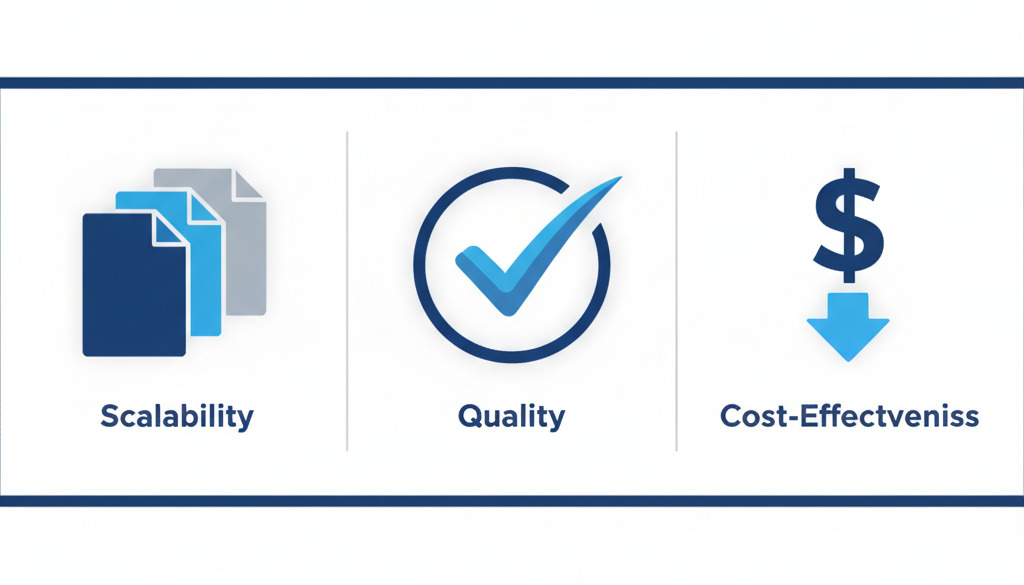
The most immediate and obvious benefit of AI is speed. A task that might take a person hours—like drafting a well-researched blog post or creating 20 unique social media updates—can be completed by an AI in minutes. This allows you to move from publishing content sporadically to maintaining a consistent, high-volume schedule. Consistency is a key factor in building trust and authority with both search engines and potential customers. With AI, you can finally execute the robust content calendar you've always wanted but never had the bandwidth for.
Enhancing Content Quality and Relevance
Counterintuitively, AI can lead to higher-quality, more human-centric content. How? By leveraging data. AI tools can analyze top-ranking articles, customer search queries, and social media trends to understand precisely what your audience is interested in. It can identify common questions and pain points, ensuring that the content you create is not just well-written but also incredibly relevant and helpful. This data-driven approach moves you from guessing what customers want to knowing what they need.
Driving Cost-Effectiveness in Marketing
Hiring a dedicated content writer, SEO specialist, or marketing agency can be prohibitively expensive for many small businesses. While AI doesn't eliminate the need for human strategy, it can drastically reduce the costs associated with content production. By automating first drafts, research, and optimization, you can achieve the output of a small team with just a few affordable software tools. This frees up your marketing budget for other growth activities, providing a much higher return on investment.
AI-Powered Content Ideation and Strategy
One of the hardest parts of content marketing is answering the question: "What should I write about?" AI is a game-changer for this initial, crucial stage, transforming ideation from a brainstorming headache into a strategic, data-backed process.
Leveraging AI for Topic Generation
Instead of staring at a blank page, you can use AI tools to uncover a wealth of content ideas. These platforms can analyze keyword data, scan competitor websites, and monitor forums like Reddit or Quora to find out what questions your target audience is actively asking. The result is a list of highly relevant, demand-driven topics that you know people are already searching for, taking the guesswork out of your content plan.
Audience Persona Development with AI
How well do you really know your ideal customer? AI can deepen your understanding by analyzing your existing customer data, social media follower demographics, and website engagement patterns. It can help you build detailed buyer personas that go beyond basic demographics to include pain points, motivations, preferred content formats, and online behavior. With these AI-enhanced personas, you can craft content that speaks directly to the needs and desires of your audience.
Competitive Analysis through AI
Keeping an eye on the competition is critical. AI tools can automate this process, continuously monitoring your competitors’ websites and social media channels. You can get alerts on what they’re publishing, which of their articles are gaining the most traction, and what keywords they are ranking for. This intelligence allows you to identify gaps in their strategy—topics they haven't covered or questions they haven't answered—and create content that fills those voids, giving you a competitive edge.
Generative AI: Crafting Engaging Content with Ease
This is where the magic truly happens. Generative AI refers to models that can create new, original content—from text to images—based on a prompt. For SMBs, this technology opens up a world of possibilities for creating diverse and engaging content without needing a team of specialist creators.
The Power of Text Generation
At the forefront of generative AI is text creation. With a simple instruction, you can generate a wide array of written content. This includes:
- Blog Post Drafts: Get a fully structured article with an introduction, body paragraphs, and a conclusion in minutes.
- Social Media Updates: Create dozens of variations for captions on Facebook, LinkedIn, or Twitter.
- Email Newsletters: Draft compelling emails for your promotional campaigns or weekly updates.
- Product Descriptions: Write persuasive and SEO-friendly descriptions for your e-commerce store.
The key is to view these as high-quality first drafts. You then step in to add your unique insights, brand voice, and specific examples.
Visual Content Creation with AI
Written content is only part of the equation. Visuals are essential for capturing attention. AI is rapidly advancing in this area, with tools that can generate custom images, logos, and even short video clips from text descriptions. Need a unique image for your blog post about "sustainable dog food"? An AI can create one for you instantly, saving you from sorting through stock photo libraries and giving your content a unique visual identity.
Personalization at Scale
Customers today expect personalized experiences. According to Salesforce research, unified data is the key to creating these experiences. AI is the only way to deliver this level of personalization at scale. By connecting AI to your customer data, you can tailor content for different segments. For example, you can create different versions of a landing page for first-time visitors versus returning customers, or send email campaigns with product recommendations based on a user's past purchase history. This level of relevance dramatically increases engagement and conversion rates.
SEO Optimization: Making Your Content Discoverable with AI
Creating great content is only half the battle; people need to be able to find it. Search Engine Optimization (SEO) is the art and science of getting your content to the top of Google, and AI is your new secret weapon. It moves SEO from a manual, checklist-driven task to a dynamic, intelligent process.
AI-Driven Keyword Research and Integration
Traditional keyword research can be tedious. AI tools not only identify primary keywords but also suggest a whole universe of semantically related terms and long-tail keywords. This is crucial because modern search engines prioritize content that covers a topic comprehensively. AI helps you naturally weave these terms into your text, signaling to Google that your article is an authoritative resource on the subject.
On-Page SEO Analysis and Improvement
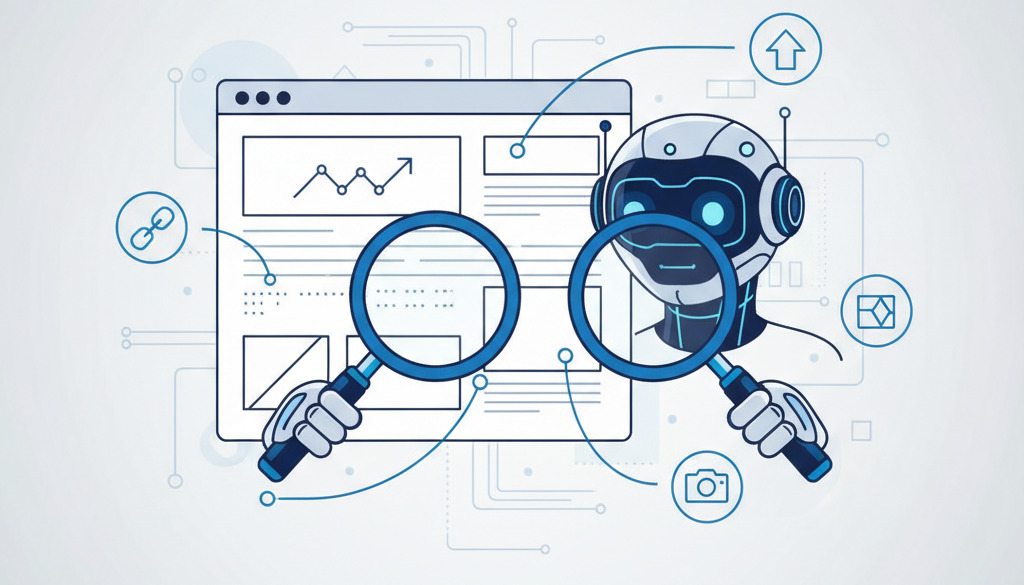
Once your content is written, AI can act as an instant SEO consultant. It will scan your article and provide actionable recommendations to improve its performance. This can include:
- Analyzing readability and sentence structure.
- Checking for optimal keyword density and placement.
- Ensuring proper use of headings (H1, H2, H3).
- Suggesting internal and external linking opportunities.
- Recommending improvements for your meta title and description.
Predictive SEO: Staying Ahead of the Curve
The world of SEO is constantly changing as Google updates its algorithms. Some advanced AI platforms are beginning to offer predictive analytics, forecasting which topics are likely to trend in the future and how search engine updates might impact your rankings. This forward-looking approach, sometimes called Generative Engine Optimization (GEO), shifts your strategy from being reactive to proactive, helping you create content that will rank well not just today, but tomorrow as well.
Automating Content Distribution and Promotion
Hitting "publish" is not the end of your content's journey. Promotion is what gets it in front of the right eyeballs. AI can automate and optimize this critical distribution phase, ensuring your hard work doesn't go to waste.
Smart Social Media Scheduling
When is the best time to post on Facebook? On LinkedIn? AI-powered social media tools take the guesswork out of scheduling. By analyzing the past engagement of your followers, they can determine the optimal times to post for each platform to achieve maximum visibility and interaction. Some tools can also automatically repurpose a single blog post into multiple social media formats, saving you hours of work.
AI-Assisted Email Marketing Campaigns
Email remains one of the highest ROI marketing channels. AI can supercharge your efforts by personalizing email subject lines and content for different audience segments. It can also optimize send times on an individual user basis, delivering the email at the exact moment a person is most likely to check their inbox. This leads to higher open rates, click-through rates, and ultimately, more conversions.
Paid Advertising Optimization
If you use paid ads on platforms like Google or Facebook, AI is indispensable. It can analyze thousands of data points in real-time to optimize your ad spend. AI can automatically adjust bids, test different ad creatives and copy, and re-allocate your budget to the best-performing campaigns. This ensures you get the most possible return on every dollar you spend on advertising.
Overcoming Common SMB Objections to AI Content
For business owners who are (understandably) cautious about new technology, the idea of using AI for something as personal as your brand's voice can be daunting. Let’s address some of the most common concerns head-on.

"It's Too Complicated to Learn"
While the technology behind AI is complex, the tools built for users like you are not. The industry has made huge strides in creating intuitive, user-friendly interfaces. Many AI content tools feel as simple to use as a word processor or a social media app. You don’t need to know any code or understand machine learning to get started. The focus is on clear instructions and actionable outputs.
"Will it Sound Robotic?"
"AI should be your first drafter, not your final publisher. The final 10% of human polish, perspective, and personality is what separates good content from great content."
This is perhaps the most significant concern. Early AI text generators often produced awkward and generic content. However, today’s models are vastly more sophisticated. That said, AI-generated content should always be seen as a starting point. The best practice is to use AI to create a solid, well-researched draft, and then have a human—you or someone on your team—edit, refine, and inject your unique brand voice, stories, and expertise. It’s a partnership, not a replacement.
"Is it Expensive for My Business?"
Like any software, there is a range of pricing. Many powerful AI tools offer free trials or freemium plans that are more than enough to get started. Even paid plans are often significantly cheaper than hiring a freelance writer for a single article. When you consider the amount of time saved and content produced, the ROI on a good AI content tool is often incredibly high for an SMB.
Practical Application: Choosing the Right AI Tools for Your SMB
The market for AI tools is exploding, which can be overwhelming. To simplify, let's break them down into key categories and discuss how to choose the right one for your specific needs.
Essential AI Tool Categories for SMBs
Most AI tools you'll encounter fall into one of these buckets. Many platforms now combine several of these features into an all-in-one solution.
| Tool Category | Primary Function | Use Case for an SMB |
|---|---|---|
| Content Generators | Create written content (blog posts, social media, emails). | Quickly drafting articles and marketing copy. |
| SEO Analyzers | Analyze and optimize content for search engines. | Improving Google rankings for your website pages. |
| Social Media Schedulers | Automate posting and find optimal times. | Maintaining a consistent presence on social media. |
| Analytics Platforms | Track performance and provide insights. | Understanding which content drives traffic and leads. |
Evaluating AI Solutions
When you're ready to select a tool, use this checklist to guide your decision:
- Ease of Use: Is the interface clean and intuitive for a non-technical user?
- Feature Set: Does it solve your primary pain point (e.g., writing blog posts, SEO)?
- Output Quality: During a free trial, is the generated content high-quality and relevant?
- Pricing: Does the cost fit your budget, and is the value proposition clear?
- Customer Support & Training: Are there resources to help you get the most out of the tool?
Where to Start: A Recommended Solution
For SMB owners who know that SEO-driven blog content is vital but simply lack the time or desire to write it, specialized services are emerging that handle the entire process. A perfect example is a service like More Customers From Your Blog. Their entire model is built around a powerful AI that writes professional SEO blog articles directly for your website in minutes. It's designed to feel, as they say, "almost as if by magic." This type of solution is ideal because it directly addresses the core problem: getting found on Google by customers without sinking countless hours into writing.
The Human Element: AI as a Content Marketing Partner
It is crucial to reinforce this point: AI is a tool, a powerful one, but still just a tool. It does not replace human strategy, creativity, or brand ownership. The most successful businesses will be those that learn to partner with AI, not just delegate to it.
The Indispensable Role of Human Oversight
AI doesn't understand your company's mission. It doesn't share your values. It can't build genuine relationships with your customers. Your role as the business owner is to provide the strategic direction. You set the goals, define the brand voice, and make the final call on what gets published. AI executes tasks; you guide the strategy.
Editing and Refinement: Adding Your Unique Brand Voice
An AI can write a factually correct article about your industry, but it can't add the personal anecdote about a customer success story that will truly resonate with your audience. It can't capture the unique sense of humor or empathy that defines your brand. The final editing process is where you infuse the AI-generated draft with your unique personality and transform it from generic content into a true asset for your brand.
Strategic Direction: Where Humans Shine
Ultimately, high-level marketing is about making smart decisions. Which new product should we launch? Which new customer segment should we target? How should we respond to a growing competitor? These are strategic questions that require emotional intelligence, market intuition, and a deep understanding of your business—all uniquely human traits. Let AI handle the "how" so you can focus on the "what" and "why."
Data, Analytics, and Continuous Improvement with AI
AI’s ability to process data is one of its greatest strengths, and this extends far beyond the initial content creation. AI is a vital tool for understanding what’s working, what isn’t, and how you can improve your results over time.
AI for Performance Tracking
Your website analytics, social media accounts, and sales platforms generate a massive amount of data. It’s often too much for a human to realistically analyze. AI-powered analytics tools can connect to all these sources, process the data, and deliver clear, concise reports on your key performance indicators (KPIs). You can immediately see which blog posts are driving the most leads, which social media channels are most effective, and how your content is contributing to sales.
Insights for Iteration
Beyond simple reporting, AI can provide deep insights for improvement. It can identify patterns that you might miss. For instance, it might discover that your articles over 1,500 words with "How-To" in the title generate 50% more organic traffic than any other format. Or it might find that your audience engages most with posts that include a customer quote. These insights are pure gold, providing a clear roadmap for your future content strategy.
A/B Testing and Optimization
Want to know which headline will get more clicks? Or which call-to-action button color will drive more sign-ups? AI can facilitate sophisticated A/B testing by creating multiple variations of your content and automatically showing them to different segments of your audience. It then analyzes the results and tells you which version performed best, allowing you to continuously optimize your content for maximum impact.
Ethical Considerations and AI Content Marketing
With great power comes great responsibility. As you begin to integrate AI into your marketing, it's important to be mindful of the ethical implications and best practices to maintain the trust of your audience.
Transparency and Disclosure
There is an ongoing debate about whether you should disclose the use of AI in your content. While there are no hard and fast rules yet, a good practice is to be transparent, especially if AI plays a significant role in creation. For some content, a simple disclaimer might be appropriate. For most, the fact that a human has reviewed, edited, and approved the content is enough to ensure it meets your brand's standards of quality and accuracy.
Avoiding Bias and Misinformation
AI models are trained on vast datasets from the internet, which means they can inadvertently pick up and replicate biases or outdated information. It is your responsibility to fact-check the output of any AI tool. Never blindly copy and paste AI-generated content without first verifying its accuracy and ensuring it is fair, balanced, and free from harmful stereotypes.
Data Privacy and Security
When you use an AI tool, you are often inputting data about your business and potentially your customers. It is crucial to choose reputable AI providers with clear privacy policies. Understand how your data is being used, whether it is being used to train their models, and what security measures are in place to protect your proprietary information.
The Future of AI in SMB Content Marketing: Trends to Watch
The field of AI is evolving at a breathtaking pace. What seems cutting-edge today will be standard practice tomorrow. Here are a few trends that will shape the future of content marketing for SMBs.
Hyper-Personalization
We will move beyond simple audience segmentation to true one-to-one personalization. Imagine a future where your website dynamically rewrites its content to match the specific interests and knowledge level of each individual visitor, all powered by AI. This is the future of customer experience.
AI-Powered Content Strategy Automation
AI will evolve from a content *creation* tool to a content *strategy* tool. Future AI systems may be able to analyze market data, competitive landscapes, and your business performance to proactively suggest entire marketing campaigns or pivots in your content strategy, acting as a virtual CMO.
Emergence of AI Content Specialists
As tools become more powerful, a new role will emerge: the AI content specialist or "prompt engineer." These will be marketers who are experts not in writing prose, but in writing the perfect instructions for AI models to get the best possible output. Their skill will lie in knowing how to "talk" to the AI to align its creations with strategic business goals.
Implementing AI Content Marketing: A Step-by-Step Guide for SMBs
Feeling motivated? Here is a simple, actionable plan to get started with AI in your content marketing workflow without feeling overwhelmed.
- Define Your Goals: Start with the "why." Do you want to increase organic traffic, generate more leads, or save time on social media? Your goal will determine which tools you need.
- Assess Your Current Content & Resources: Look at what you’re doing now. Where is the biggest bottleneck? Is it writing, SEO, or promotion? Where do you spend the most time for the least reward?
- Research and Select a Key AI Tool: Based on your goal and bottleneck, pick one tool to start with. Don’t try to implement five at once. If your biggest problem is blog writing, start with a content generator.
- Run a Pilot Project: Choose a small, low-risk project. For example, use AI to generate three blog posts or a week's worth of social media content. Treat it as an experiment.
- Integrate and Train: Once you see the value, integrate the tool into your regular workflow. Take some time to learn its more advanced features to maximize your effectiveness.
- Monitor, Analyze, and Refine: Use analytics to track the performance of your AI-assisted content. Learn from the results and continually refine your prompts and your editing process to get better over time.
Case Study Snippet: SMB Success with AI Content
Let's look at a common scenario. An established local bakery had a beautiful website but got very little traffic. The owner knew she needed a blog to attract customers searching for things like "best birthday cakes in [city]" but had zero time to write.
The Challenge
The owner was spending her time baking, managing staff, and serving customers. Her website sat dormant, and her larger online competitors dominated the local search results. She was losing business to other bakeries who were more visible on Google.
The Solution with AI
Feeling the pressure, she turned to a service designed for this exact problem: More Customers From Your Blog. Instead of having to learn SEO and writing herself, she used the service to generate high-quality, locally-focused SEO articles about topics like "Choosing the Perfect Wedding Cake" and "Behind the Scenes at Our Sourdough Starter." The AI did the heavy lifting of research and drafting, and she spent just 15-20 minutes a week editing them to add her personal touch and photos of her creations.
Keep reading
Hand-picked guides that go deeper — open the one you need next:
- Content Marketing Automation for Small Business
- AI for Small Business Content Marketing: Boost Reach and ROI
- Local SEO for Small Business: Dominate with AI Content
- The Future of Content Marketing: AI for Small Business
→ Read the full Small Business guide
→ Read the full Small Business guide